
1 yr. ago
Here’s a snapshot of the current crypto market as of August 26, 2025:
Today’s Crypto Market Highlights
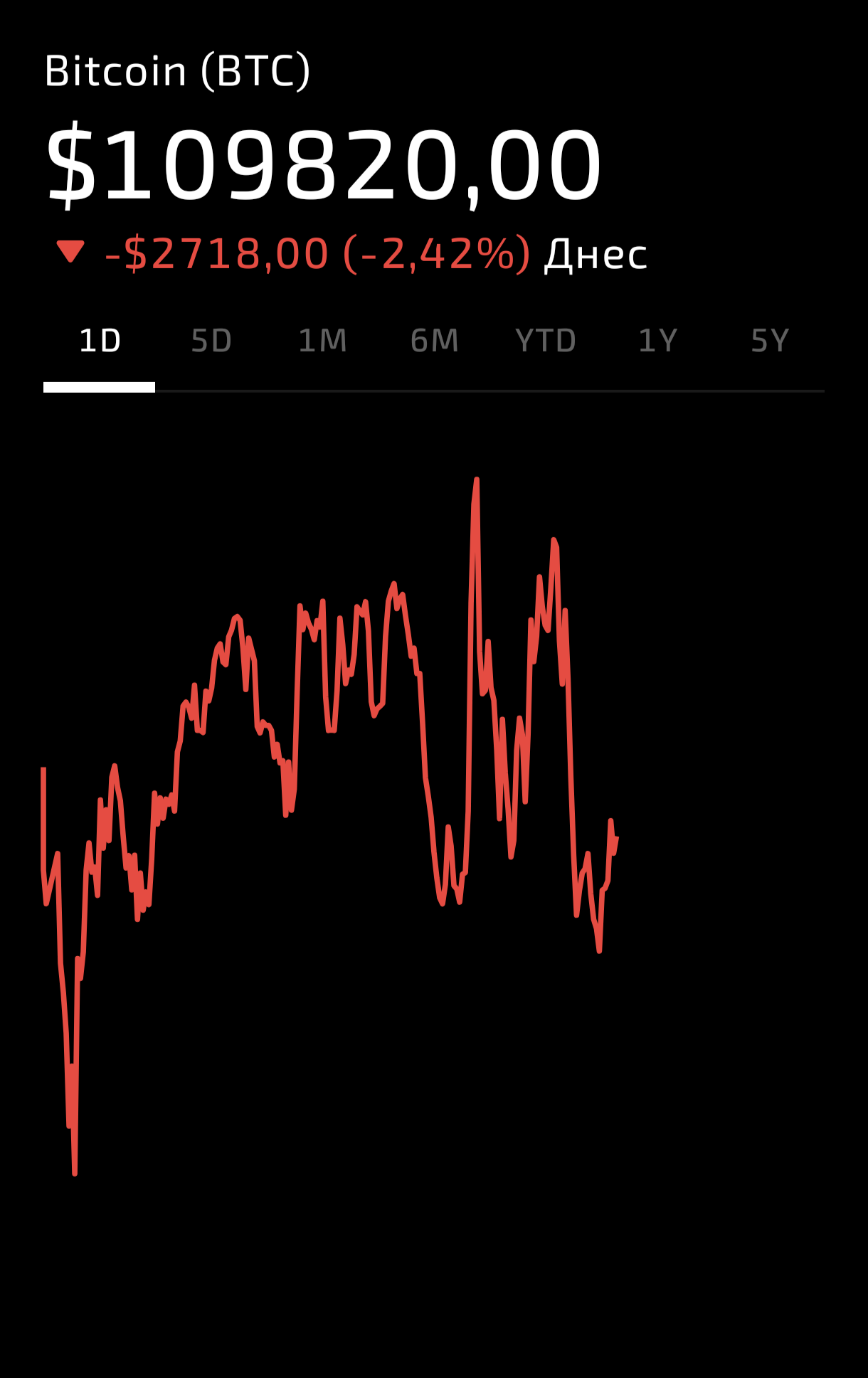
Bitcoin (BTC) has pulled back from its August highs (~$124K), now hovering near the key $110K support.
Ethereum (ETH) recently hit fresh all-time highs (~$4,954) before retreating—current price sits in the $4.4K–$4.6K range.
The wider crypto market cap slipped around 2–4%, impacted by heavy whale sell-offs, ETF outflows, and technical breakdowns.
Notably, BTC dipped below its 100-day moving average—a bearish technical signal.
Meanwhile, institutional demand remains robust, with large treasuries building positions in both BTC and ETH. Over 150 treasury companies now hold nearly 1 million BTC—putting upward pressure on supply.
Altcoins to watch: XRP sees renewed bullish interest tied to a Mastercard deal, while Remittix (RTX) and Ethena (ENA) are drawing speculative attention thanks to real-world utility and DeFi positioning.
---
Near-Term Outlook: Today to This Weekend
Technical & Sentiment Drivers
Bearish pressure persists: Bitcoin’s breakdown below critical support levels, accompanied by significant whale liquidations, signals potential for further downside toward the low-$100K range (even as far as ~$100K).
Ethereum remains technically stronger, supported by institutional accumulation—but profit-taking could cap upside near $5K short-term.
Macro-watch: Expectations for Fed rate cuts have buoyed markets, but any deviation from that view—especially amid geopolitical or policy turbulence—could derail crypto gains.
Price Projections (out to August 31)
BTC: Likely to remain range-bound between $105K–$115K, dependent on whether $110K support holds.
ETH: Could test the $5K level again this week if momentum holds, though elevated volatility remains likely.
Altcoins like XRP, ENA, RTX may outperform in bursts, driven by news catalysts or DeFi activity.
---
Week-Ahead Perspective (August 27–September 2)
Potential Scenarios
Cautious rebound: If technical supports hold and macro narratives turn dovish, BTC could test $115K–$120K, with ETH eyeing a breakout beyond $5K.
Further correction: A breach of $110K in BTC could open the door to a dip toward $105K or lower, especially amid continued sell-offs or sentiment shifts.
Altcoin rotation: Investors may shift into high-utility and speculative altcoins that shine under strong narratives (e.g., RTX’s utility use-case or XRP’s Mastercard momentum).
Technical & Fundamental Catalysts to Watch
BTC’s 100-day moving average and CME futures gaps (~$93K) remain key technical markers.
Institutional flows, ETF performance, and on-chain accumulation trends could cushion any decline or fuel rallies.
Fed policy signals and global economic headlines may drive broader market sentiment.
Forecast Summary
Asset Short-Term (to week-end) Week-Ahead (to Sept 2)
BTC Consolidate near $110K; risk of dip to ~$105K Rebound to $115–120K if support holds; deeper pullback if not
ETH Testing $5K; volatility expected Possible breakout beyond $5K; else minor correction
Altcoins Sharp moves on news or utility developments Rotation into high-conviction plays (e.g. ENA, RTX, XRP)
Today’s Crypto Market Highlights
Bitcoin (BTC) has pulled back from its August highs (~$124K), now hovering near the key $110K support.
Ethereum (ETH) recently hit fresh all-time highs (~$4,954) before retreating—current price sits in the $4.4K–$4.6K range.
The wider crypto market cap slipped around 2–4%, impacted by heavy whale sell-offs, ETF outflows, and technical breakdowns.
Notably, BTC dipped below its 100-day moving average—a bearish technical signal.
Meanwhile, institutional demand remains robust, with large treasuries building positions in both BTC and ETH. Over 150 treasury companies now hold nearly 1 million BTC—putting upward pressure on supply.
Altcoins to watch: XRP sees renewed bullish interest tied to a Mastercard deal, while Remittix (RTX) and Ethena (ENA) are drawing speculative attention thanks to real-world utility and DeFi positioning.
---
Near-Term Outlook: Today to This Weekend
Technical & Sentiment Drivers
Bearish pressure persists: Bitcoin’s breakdown below critical support levels, accompanied by significant whale liquidations, signals potential for further downside toward the low-$100K range (even as far as ~$100K).
Ethereum remains technically stronger, supported by institutional accumulation—but profit-taking could cap upside near $5K short-term.
Macro-watch: Expectations for Fed rate cuts have buoyed markets, but any deviation from that view—especially amid geopolitical or policy turbulence—could derail crypto gains.
Price Projections (out to August 31)
BTC: Likely to remain range-bound between $105K–$115K, dependent on whether $110K support holds.
ETH: Could test the $5K level again this week if momentum holds, though elevated volatility remains likely.
Altcoins like XRP, ENA, RTX may outperform in bursts, driven by news catalysts or DeFi activity.
---
Week-Ahead Perspective (August 27–September 2)
Potential Scenarios
Cautious rebound: If technical supports hold and macro narratives turn dovish, BTC could test $115K–$120K, with ETH eyeing a breakout beyond $5K.
Further correction: A breach of $110K in BTC could open the door to a dip toward $105K or lower, especially amid continued sell-offs or sentiment shifts.
Altcoin rotation: Investors may shift into high-utility and speculative altcoins that shine under strong narratives (e.g., RTX’s utility use-case or XRP’s Mastercard momentum).
Technical & Fundamental Catalysts to Watch
BTC’s 100-day moving average and CME futures gaps (~$93K) remain key technical markers.
Institutional flows, ETF performance, and on-chain accumulation trends could cushion any decline or fuel rallies.
Fed policy signals and global economic headlines may drive broader market sentiment.
Forecast Summary
Asset Short-Term (to week-end) Week-Ahead (to Sept 2)
BTC Consolidate near $110K; risk of dip to ~$105K Rebound to $115–120K if support holds; deeper pullback if not
ETH Testing $5K; volatility expected Possible breakout beyond $5K; else minor correction
Altcoins Sharp moves on news or utility developments Rotation into high-conviction plays (e.g. ENA, RTX, XRP)
1 yr. ago
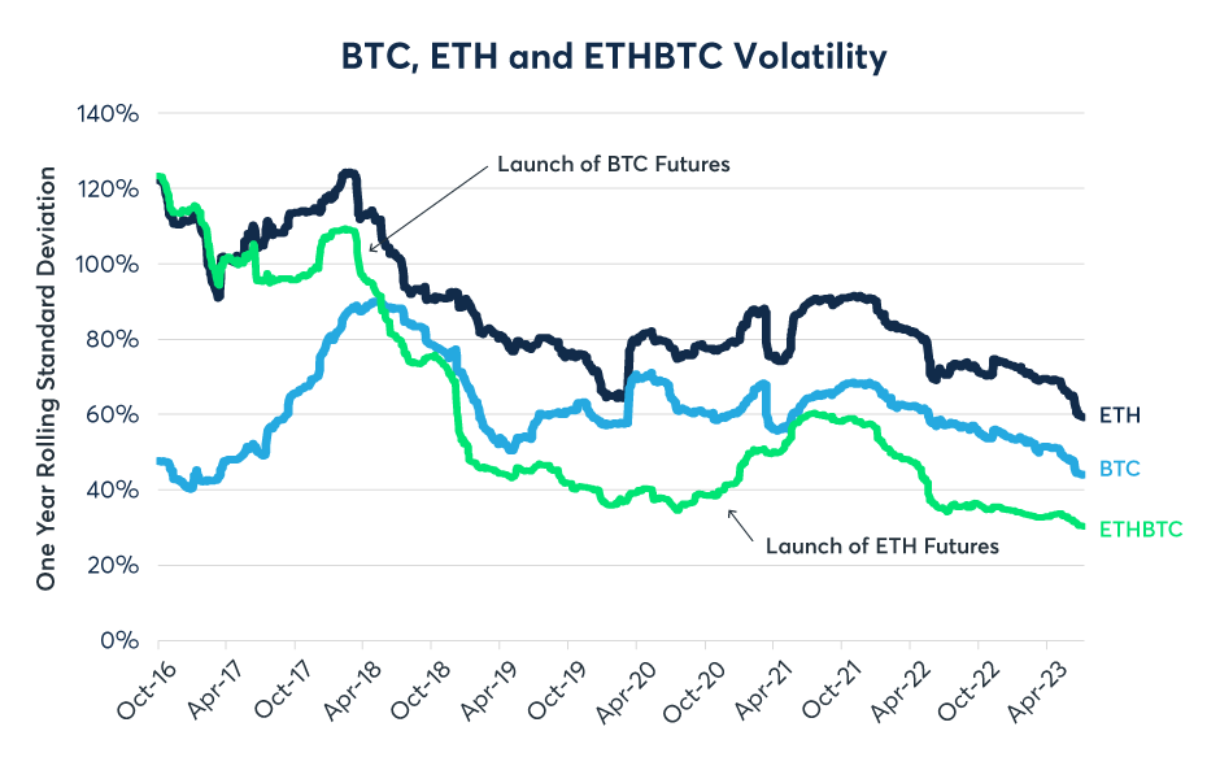
Here’s today’s crypto snapshot, with visuals to help you interpret the BTC/ETH landscape:
---
📊 Market Overview (as of June 8, 2025, Europe/Sofia timezone)
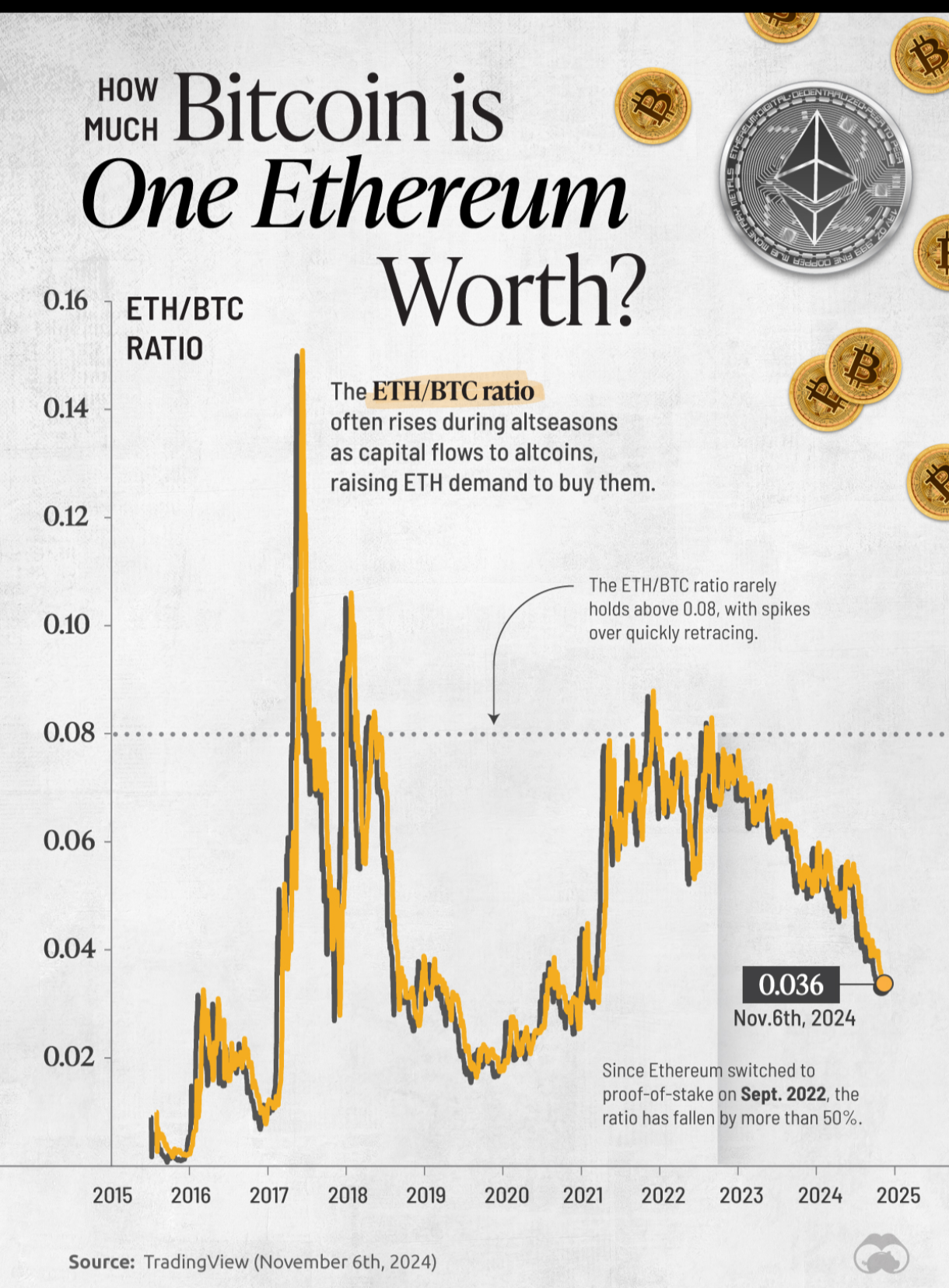
Bitcoin (≈ $105,460): Up ~0.5 % intraday, after cooling off from an all-time high near $111,880. Technicals show a healthy pullback amid macroeconomic uncertainties like rising bond yields . Its 4h RSI sits near 42, hovering just above oversold—potential rebound zone .
Ethereum (≈ $2,517): Up ~1 %, breaking above the 200‑day EMA—typically bullish . On‑chain data indicates that ~67 % of holders are in profit, suggesting limited near-term downside .
---
🔍 Key Dynamics at Play
1. Macro & Technical Outlook
BTC’s recent pullback (~7 %) stems from U.S. tariff-related uncertainty, affecting bond yields and risk appetite .
A notable CME futures gap around $104,312 might act as a magnet—either on the downside as a retracement target or through triggering a momentum rebound if support holds .
RSI signals for BTC (~42) and ETH (~39) are brushing oversold territories, often prime conditions for buying rallies .
2. Institutional, Regulatory, & On‑chain Flows
Stablecoin legislation in Congress is expected to drive corporate demand for T‑bills, indirectly boosting crypto ecosystem confidence .
Companies (like MicroStrategy) and digital ***** et treasury funds are capitalizing on crypto as an inflation hedge, though risks around leverage and crypto valuation remain .
Spot Bitcoin ETFs, national-level strategic BTC reserves, and crypto‑friendly U.S. policy are fueling bullish sentiment, with potential upside into 2025–26 .
3. The Political Pivot
Crypto conferences (e.g., Bitcoin 2025 in Vegas) are spotlighting a shift from libertarian roots to institutional and political mainstreaming, particularly aligning with modern U.S. Republicans .
Such alignment boosts legitimacy but could also amplify politicized volatility in crypto regulations and public perception.
---
🧠 Quick Take & Strategy Scout
Asset Technical Signal On‑Chain Trend Near-Term Outlook
Bitcoin RSI near 42 → could rebound from $104k gap Exchange outflows suggest accumulation Watch support at $104k – $103k, resistance ~ $110k–115k
Ethereum Above 200-day EMA, RSI ~39 (oversold) Strong holder profitability (~67 %) Key support: $2,316–$2,402; bull-flag breakout eyed
🔔 Signals to watch:
BTC break below $105k with reversal near $104k may signal short-term selling pressure.
ETH holding its EMA means momentum to $2,640+ could unfold.
---
📊 Market Overview (as of June 8, 2025, Europe/Sofia timezone)
Bitcoin (≈ $105,460): Up ~0.5 % intraday, after cooling off from an all-time high near $111,880. Technicals show a healthy pullback amid macroeconomic uncertainties like rising bond yields . Its 4h RSI sits near 42, hovering just above oversold—potential rebound zone .
Ethereum (≈ $2,517): Up ~1 %, breaking above the 200‑day EMA—typically bullish . On‑chain data indicates that ~67 % of holders are in profit, suggesting limited near-term downside .
---
🔍 Key Dynamics at Play
1. Macro & Technical Outlook
BTC’s recent pullback (~7 %) stems from U.S. tariff-related uncertainty, affecting bond yields and risk appetite .
A notable CME futures gap around $104,312 might act as a magnet—either on the downside as a retracement target or through triggering a momentum rebound if support holds .
RSI signals for BTC (~42) and ETH (~39) are brushing oversold territories, often prime conditions for buying rallies .
2. Institutional, Regulatory, & On‑chain Flows
Stablecoin legislation in Congress is expected to drive corporate demand for T‑bills, indirectly boosting crypto ecosystem confidence .
Companies (like MicroStrategy) and digital ***** et treasury funds are capitalizing on crypto as an inflation hedge, though risks around leverage and crypto valuation remain .
Spot Bitcoin ETFs, national-level strategic BTC reserves, and crypto‑friendly U.S. policy are fueling bullish sentiment, with potential upside into 2025–26 .
3. The Political Pivot
Crypto conferences (e.g., Bitcoin 2025 in Vegas) are spotlighting a shift from libertarian roots to institutional and political mainstreaming, particularly aligning with modern U.S. Republicans .
Such alignment boosts legitimacy but could also amplify politicized volatility in crypto regulations and public perception.
---
🧠 Quick Take & Strategy Scout
Asset Technical Signal On‑Chain Trend Near-Term Outlook
Bitcoin RSI near 42 → could rebound from $104k gap Exchange outflows suggest accumulation Watch support at $104k – $103k, resistance ~ $110k–115k
Ethereum Above 200-day EMA, RSI ~39 (oversold) Strong holder profitability (~67 %) Key support: $2,316–$2,402; bull-flag breakout eyed
🔔 Signals to watch:
BTC break below $105k with reversal near $104k may signal short-term selling pressure.
ETH holding its EMA means momentum to $2,640+ could unfold.
1 yr. ago
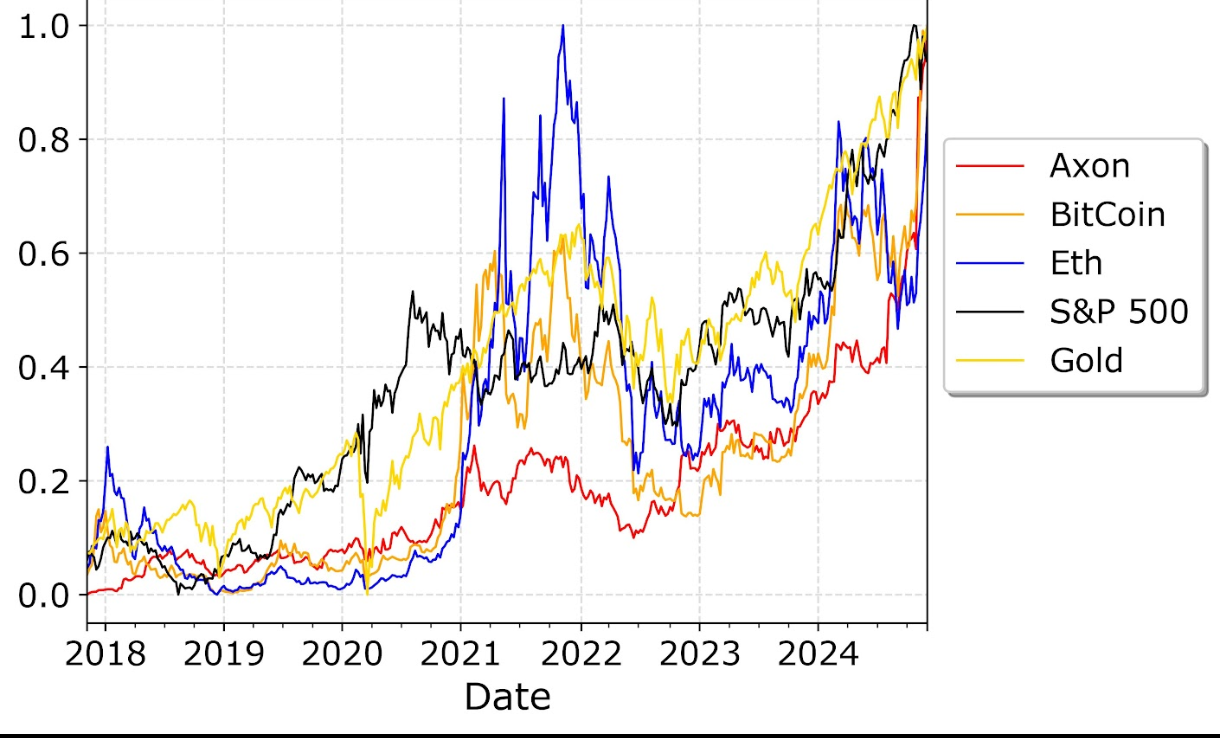
Here's a crypto market ****** ysis for today (June 4, 2025) — in English, with images and charts.
---
📊 Overall Market Overview
Global Market Cap: ~$3.44 trillion (↑ 1.6% in the last 24 hours)
24h Trading Volume: ~$92.3 billion
Bitcoin Dominance: 60.9%
(Source: CoinGecko)
---
🪙 Top Cryptocurrencies Today
Coin Price 24h Change
Bitcoin (BTC) $69,500 +2.1%
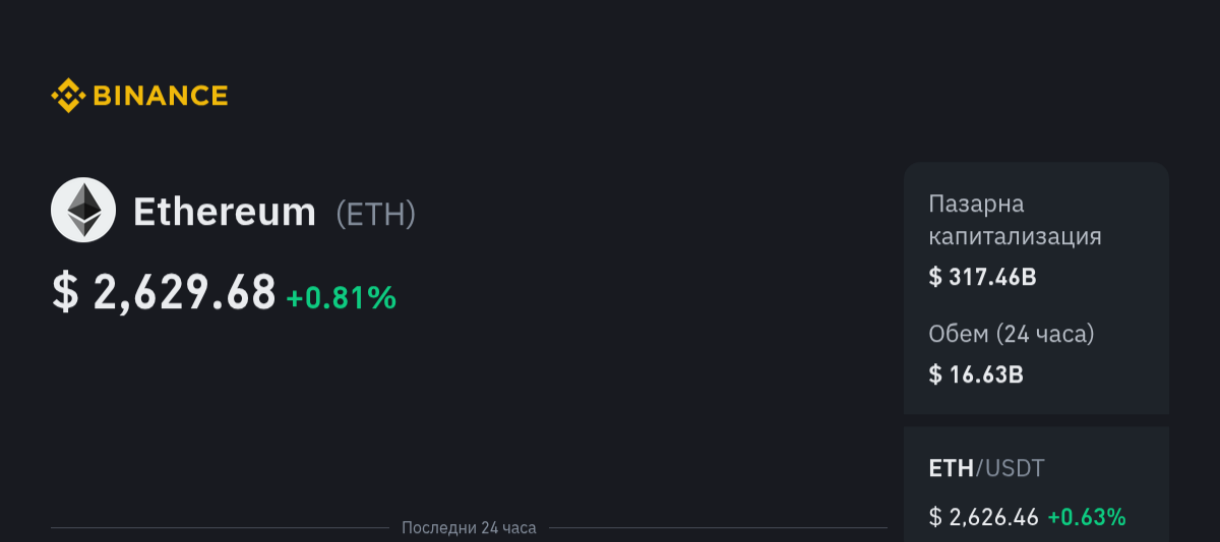
Ethereum (ETH) $3,780 +1.8%
XRP $2.20 Stable, potential breakout
Shiba Inu (SHIB) $0.000013 +2.91%
---
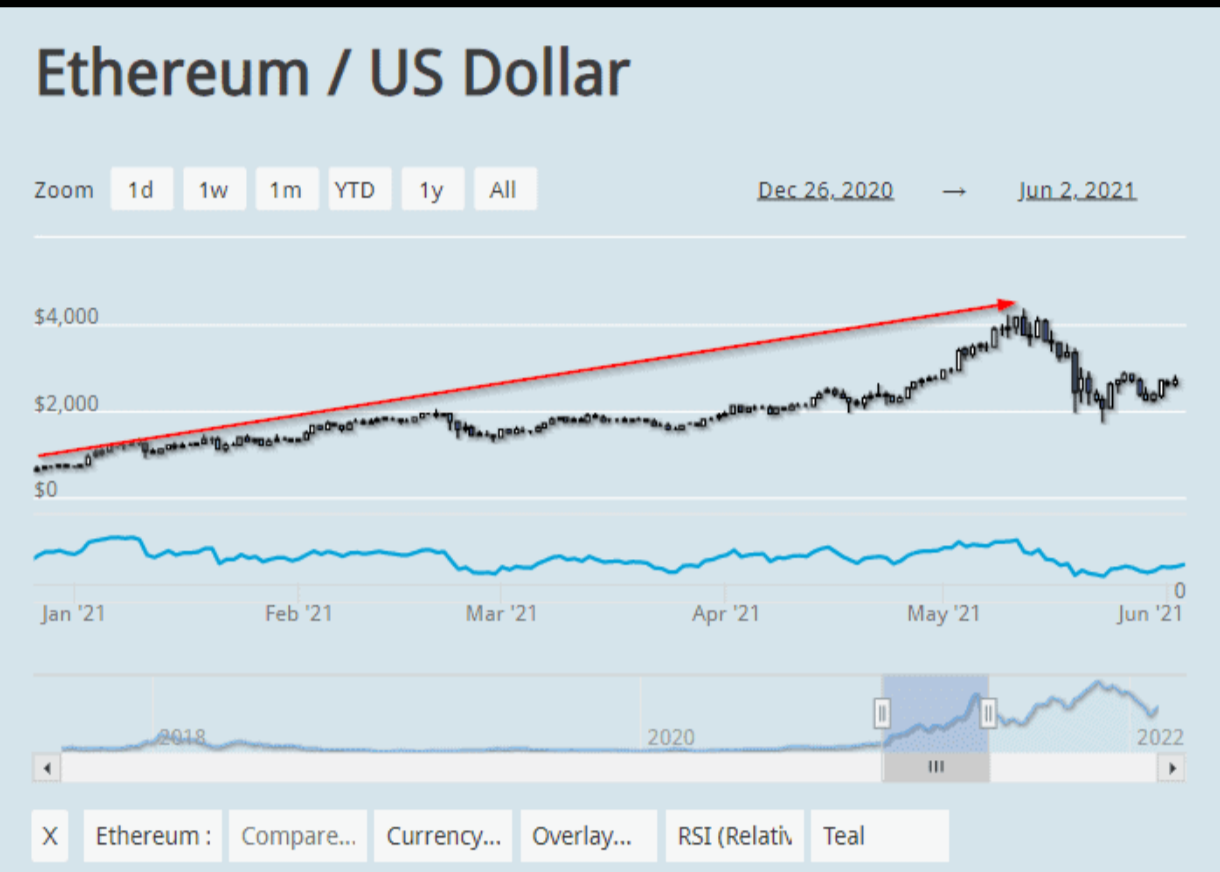
📈 Ethereum Price Chart
---
🔍 Market ****** ysis & Predictions
🔹 Bitcoin (BTC)
Recently bounced back from $93,232 (in May).
Facing resistance around $106,000–$106,500.
Continued ETF inflows (e.g., BlackRock's) support upward momentum.
🔹 Ethereum (ETH)
Testing resistance at $2,705.
May dip back to $1,975 if it fails to hold.
🔹 XRP
Approaching key level at $2.20.
High volatility expected between June 4–6.
Analysts suggest watching closely for a breakout.
🔹 Shiba Inu (SHIB)
Price up nearly 3% today.
Following the meme coin rally trend.
---
📊 Overall Market Overview
Global Market Cap: ~$3.44 trillion (↑ 1.6% in the last 24 hours)
24h Trading Volume: ~$92.3 billion
Bitcoin Dominance: 60.9%
(Source: CoinGecko)
---
🪙 Top Cryptocurrencies Today
Coin Price 24h Change
Bitcoin (BTC) $69,500 +2.1%
Ethereum (ETH) $3,780 +1.8%
XRP $2.20 Stable, potential breakout
Shiba Inu (SHIB) $0.000013 +2.91%
---
📈 Ethereum Price Chart
---
🔍 Market ****** ysis & Predictions
🔹 Bitcoin (BTC)
Recently bounced back from $93,232 (in May).
Facing resistance around $106,000–$106,500.
Continued ETF inflows (e.g., BlackRock's) support upward momentum.
🔹 Ethereum (ETH)
Testing resistance at $2,705.
May dip back to $1,975 if it fails to hold.
🔹 XRP
Approaching key level at $2.20.
High volatility expected between June 4–6.
Analysts suggest watching closely for a breakout.
🔹 Shiba Inu (SHIB)
Price up nearly 3% today.
Following the meme coin rally trend.
1 yr. ago
Here’s the latest crypto market ***** ysis as of June 2, 2025, in English:
---
🟠 Bitcoin (BTC)
Current Price: ~$104,845
Key Levels:
Resistance: $110,000 – $112,000
Support: $103,145 (0.236 Fibonacci), then $100,000
Indicators:
RSI: ~49.7 (neutral)
MACD: Slightly bullish momentum
50-day SMA: $97,630 (acts as support)
> Outlook:
Bitcoin is consolidating near $105K. If it breaks below $103,145, we could see a dip toward $100K. However, long-term indicators like the 50-day moving average are still showing support and overall bullish strength.
---
🟣 Ethereum (ETH)
Current Price: ~$2,578
Monthly Return (May): +46%
Chart Pattern: Forming a bull flag (typically a bullish continuation)
Short-term Indicators: Slightly bearish
> Outlook:
Despite strong recent gains, ETH may be entering a minor pullback. If the bull flag plays out, ETH could break above $3,000 in the coming weeks.
---
🔵 XRP
Current Price: ~$0.52
Forecast: Potential move toward $0.70 – $0.80 in June or July (based on ***** yst predictions)
> Outlook:
XRP is holding steady. Technical ***** ysts see possible upside if buying volume increases.
---
🟡 Binance Coin (BNB) & Solana (SOL)
BNB: Consolidating after a 50% surge last month.
SOL: Moving sideways. Traders are watching for a breakout in either direction.
---
🔍 Summary
Market Trend: Consolidation phase across major coins.
Investor Strategy: Be cautious around key support/resistance zones. Short-term volatility may increase.
Medium/Long-Term View: Still bullish as long as support levels hold.
---
🟠 Bitcoin (BTC)
Current Price: ~$104,845
Key Levels:
Resistance: $110,000 – $112,000
Support: $103,145 (0.236 Fibonacci), then $100,000
Indicators:
RSI: ~49.7 (neutral)
MACD: Slightly bullish momentum
50-day SMA: $97,630 (acts as support)
> Outlook:
Bitcoin is consolidating near $105K. If it breaks below $103,145, we could see a dip toward $100K. However, long-term indicators like the 50-day moving average are still showing support and overall bullish strength.
---
🟣 Ethereum (ETH)
Current Price: ~$2,578
Monthly Return (May): +46%
Chart Pattern: Forming a bull flag (typically a bullish continuation)
Short-term Indicators: Slightly bearish
> Outlook:
Despite strong recent gains, ETH may be entering a minor pullback. If the bull flag plays out, ETH could break above $3,000 in the coming weeks.
---
🔵 XRP
Current Price: ~$0.52
Forecast: Potential move toward $0.70 – $0.80 in June or July (based on ***** yst predictions)
> Outlook:
XRP is holding steady. Technical ***** ysts see possible upside if buying volume increases.
---
🟡 Binance Coin (BNB) & Solana (SOL)
BNB: Consolidating after a 50% surge last month.
SOL: Moving sideways. Traders are watching for a breakout in either direction.
---
🔍 Summary
Market Trend: Consolidation phase across major coins.
Investor Strategy: Be cautious around key support/resistance zones. Short-term volatility may increase.
Medium/Long-Term View: Still bullish as long as support levels hold.
1 yr. ago
Here’s an overview of the top 10 richest individuals in the world as of early 2025, according to Forbes, along with insights into their wealth, how they began their business ventures, their ages, and family backgrounds:
---
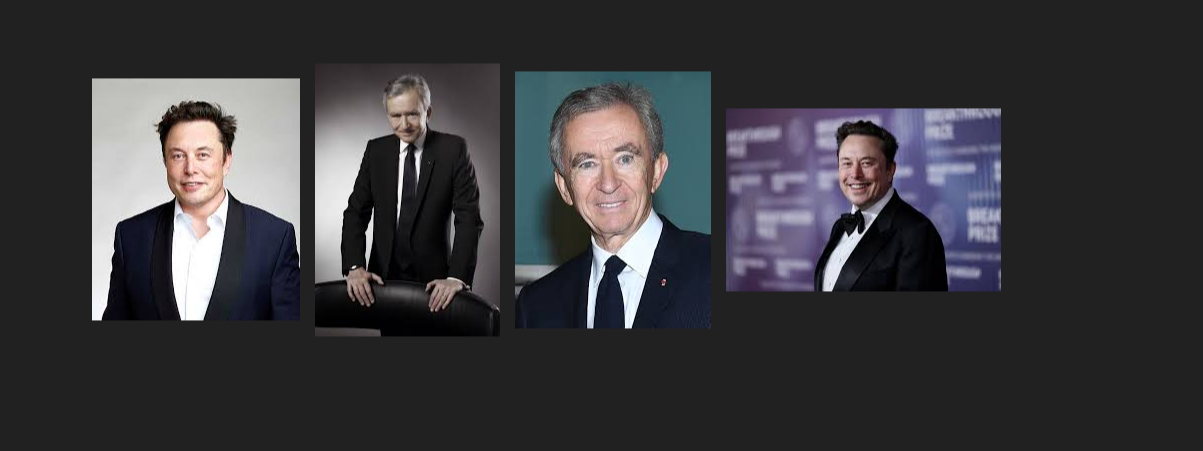
🥇 1. Elon Musk
Net Worth: $433.9 billion
Age: 53
Source of Wealth: Tesla, ******* eX, X (formerly Twitter)
How He Started: Musk co-founded Zip2, an online city guide, in 1996. He later founded X.com, which became PayPal. He then launched ******* eX in 2002 and joined Tesla in 2004.
Family: Musk has 10 children from various relationships, including with singer Grimes.
---
🥈 2. Jeff Bezos
Net Worth: $239.4 billion
Age: 61
Source of Wealth: Amazon, Blue Origin
How He Started: Bezos founded Amazon in 1994 as an online bookstore, which expanded into a global e-commerce giant.
Family: He has four children with ex-wife MacKenzie Scott.
---
🥉 3. Mark Zuckerberg
Net Worth: $211.8 billion
Age: 40
Source of Wealth: Meta Platforms (Facebook, Instagram, WhatsApp)
How He Started: Zuckerberg launched Facebook from his Harvard dorm in 2004.
Family: Married to Priscilla Chan; they have three children.
---
4. Larry Ellison
Net Worth: $204.6 billion
Age: 80
Source of Wealth: Oracle Corporation
How He Started: Ellison co-founded Oracle in 1977, focusing on database management systems.
Family: He has two children, including filmmaker Megan Ellison.
---
5. Bernard Arnault & Family
Net Worth: $181.3 billion
Age: 75
Source of Wealth: LVMH (Louis Vuitton, Moët Hennessy)
How He Started: Arnault acquired a textile company in 1984 and transformed it into LVMH, a luxury goods conglomerate.
Family: Married to Hélène Mercier; they have five children, many involved in LVMH.
---
6. Larry Page
Net Worth: $161.4 billion
Age: 51
Source of Wealth: Google (Alphabet Inc.)
How He Started: Co-founded Google in 1998 with Sergey Brin while at Stanford University.
Family: Married to Lucinda Southworth; they have two children.
---
7. Sergey Brin
Net Worth: $154.0 billion
Age: 51
Source of Wealth: Google (Alphabet Inc.)
How He Started: Co-founded Google with Larry Page in 1998.
Family: Brin has two children from his previous marriage to Anne Wojcicki.
---
8. Warren Buffett
Net Worth: $146.2 billion
Age: 94
Source of Wealth: Berkshire Hathaway
How He Started: Buffett began investing at a young age and took control of Berkshire Hathaway in the 1960s, transforming it into a diversified holding company.
Family: He has three children with his late wife, Susan Thompson.
---
9. Steve Ballmer
Net Worth: $126.0 billion
Age: 68
Source of Wealth: Microsoft, LA Clippers
How He Started: Joined Microsoft in 1980 and served as CEO from 2000 to 2014.
Family: Married to Connie Snyder; they have three sons.
---
10. Jensen Huang
Net Worth: $120.2 billion
Age: 62
Source of Wealth: NVIDIA
How He Started: Co-founded NVIDIA in 1993, focusing on graphics processing units (GPUs).
Family: Married to Lori; they have two children.
---
These individuals have significantly influenced the global economy through their innovative ventures and leadership.
---
🥇 1. Elon Musk
Net Worth: $433.9 billion
Age: 53
Source of Wealth: Tesla, ******* eX, X (formerly Twitter)
How He Started: Musk co-founded Zip2, an online city guide, in 1996. He later founded X.com, which became PayPal. He then launched ******* eX in 2002 and joined Tesla in 2004.
Family: Musk has 10 children from various relationships, including with singer Grimes.
---
🥈 2. Jeff Bezos
Net Worth: $239.4 billion
Age: 61
Source of Wealth: Amazon, Blue Origin
How He Started: Bezos founded Amazon in 1994 as an online bookstore, which expanded into a global e-commerce giant.
Family: He has four children with ex-wife MacKenzie Scott.
---
🥉 3. Mark Zuckerberg
Net Worth: $211.8 billion
Age: 40
Source of Wealth: Meta Platforms (Facebook, Instagram, WhatsApp)
How He Started: Zuckerberg launched Facebook from his Harvard dorm in 2004.
Family: Married to Priscilla Chan; they have three children.
---
4. Larry Ellison
Net Worth: $204.6 billion
Age: 80
Source of Wealth: Oracle Corporation
How He Started: Ellison co-founded Oracle in 1977, focusing on database management systems.
Family: He has two children, including filmmaker Megan Ellison.
---
5. Bernard Arnault & Family
Net Worth: $181.3 billion
Age: 75
Source of Wealth: LVMH (Louis Vuitton, Moët Hennessy)
How He Started: Arnault acquired a textile company in 1984 and transformed it into LVMH, a luxury goods conglomerate.
Family: Married to Hélène Mercier; they have five children, many involved in LVMH.
---
6. Larry Page
Net Worth: $161.4 billion
Age: 51
Source of Wealth: Google (Alphabet Inc.)
How He Started: Co-founded Google in 1998 with Sergey Brin while at Stanford University.
Family: Married to Lucinda Southworth; they have two children.
---
7. Sergey Brin
Net Worth: $154.0 billion
Age: 51
Source of Wealth: Google (Alphabet Inc.)
How He Started: Co-founded Google with Larry Page in 1998.
Family: Brin has two children from his previous marriage to Anne Wojcicki.
---
8. Warren Buffett
Net Worth: $146.2 billion
Age: 94
Source of Wealth: Berkshire Hathaway
How He Started: Buffett began investing at a young age and took control of Berkshire Hathaway in the 1960s, transforming it into a diversified holding company.
Family: He has three children with his late wife, Susan Thompson.
---
9. Steve Ballmer
Net Worth: $126.0 billion
Age: 68
Source of Wealth: Microsoft, LA Clippers
How He Started: Joined Microsoft in 1980 and served as CEO from 2000 to 2014.
Family: Married to Connie Snyder; they have three sons.
---
10. Jensen Huang
Net Worth: $120.2 billion
Age: 62
Source of Wealth: NVIDIA
How He Started: Co-founded NVIDIA in 1993, focusing on graphics processing units (GPUs).
Family: Married to Lori; they have two children.
---
These individuals have significantly influenced the global economy through their innovative ventures and leadership.
1 yr. ago
AI is rapidly transforming the job market. Here's a list of 10 professions likely to decline significantly in the next 5–10 years due to AI and automation, followed by 10 emerging professions that will rise as a result of these shifts.
---
🔻 Top 10 Professions Likely to Disappear (2025–2035)
Profession Reason for Decline
1. Data Entry Clerks Replaced by automated form processing and OCR.
2. Telemarketers AI voice bots are already outperforming humans.
3. Cashiers Self-checkout and AI-powered retail replacing them.
4. Travel Agents Online AI trip planners and chatbots dominate.
5. Customer Support Agents (Tier 1) Chatbots and voice AI now handle most queries.
6. Fast Food Workers (Front of House) Robotic kiosks and kitchen automation are growing.
7. Basic Accountants/Bookkeepers AI handles repetitive financial tasks more accurately.
8. Proofreaders AI tools (like Grammarly, GPT) are fast and scalable.
9. Courier/Delivery Drivers Autonomous delivery drones and vehicles are on the rise.
10. Market Research ****** ysts (basic) AI can ****** yze market trends faster and more accurately.
---
🔺 Top 10 New Professions Created by AI (2025–2035)
Profession Why It’s Growing
1. AI Ethicist Ensuring responsible and ethical AI use.
2. Prompt Engineer Specializes in crafting effective prompts for AI systems.
3. AI Trainer/Data Curator Improves and refines training data for machine learning models.
4. Cybersecurity ****** yst (AI-focused) Combating AI-driven cyberattacks.
5. Digital Twin Engineer Designs virtual replicas for simulations in healthcare, logistics, etc.
6. Human-AI Collaboration Designer Creates workflows for teams working alongside AI.
7. Synthetic Media Creator Uses AI to generate video, audio, and art content.
8. AI Auditor Evaluates algorithmic fairness, bias, and performance.
9. VR/AR Experience Curator Builds immersive environments enhanced by AI.
10. Robot Personality Designer Gives robots human-like traits for better interaction.
---
⏳ When Will This Happen?
2025–2027: Most administrative, retail, and Tier 1 support roles begin declining.
2028–2030: Surge in creative AI jobs, regulation, and ethics-related roles.
2031–2035: Robotics, synthetic media, and human-AI collaboration professions become widespread.
---
🔻 Top 10 Professions Likely to Disappear (2025–2035)
Profession Reason for Decline
1. Data Entry Clerks Replaced by automated form processing and OCR.
2. Telemarketers AI voice bots are already outperforming humans.
3. Cashiers Self-checkout and AI-powered retail replacing them.
4. Travel Agents Online AI trip planners and chatbots dominate.
5. Customer Support Agents (Tier 1) Chatbots and voice AI now handle most queries.
6. Fast Food Workers (Front of House) Robotic kiosks and kitchen automation are growing.
7. Basic Accountants/Bookkeepers AI handles repetitive financial tasks more accurately.
8. Proofreaders AI tools (like Grammarly, GPT) are fast and scalable.
9. Courier/Delivery Drivers Autonomous delivery drones and vehicles are on the rise.
10. Market Research ****** ysts (basic) AI can ****** yze market trends faster and more accurately.
---
🔺 Top 10 New Professions Created by AI (2025–2035)
Profession Why It’s Growing
1. AI Ethicist Ensuring responsible and ethical AI use.
2. Prompt Engineer Specializes in crafting effective prompts for AI systems.
3. AI Trainer/Data Curator Improves and refines training data for machine learning models.
4. Cybersecurity ****** yst (AI-focused) Combating AI-driven cyberattacks.
5. Digital Twin Engineer Designs virtual replicas for simulations in healthcare, logistics, etc.
6. Human-AI Collaboration Designer Creates workflows for teams working alongside AI.
7. Synthetic Media Creator Uses AI to generate video, audio, and art content.
8. AI Auditor Evaluates algorithmic fairness, bias, and performance.
9. VR/AR Experience Curator Builds immersive environments enhanced by AI.
10. Robot Personality Designer Gives robots human-like traits for better interaction.
---
⏳ When Will This Happen?
2025–2027: Most administrative, retail, and Tier 1 support roles begin declining.
2028–2030: Surge in creative AI jobs, regulation, and ethics-related roles.
2031–2035: Robotics, synthetic media, and human-AI collaboration professions become widespread.

1 yr. ago
Id the story about the metal sphera found in Colombia true?
Yes, the story about the mysterious metal sphere found in Colombia is true and has garnered significant attention from both scientists and the public.
What Is the Buga Sphere?
In March 2025, a metallic sphere was observed flying erratically over Buga, Colombia, before being recovered by locals. The object, nicknamed the "Buga Sphere," is approximately 4.5 pounds, cold to the touch, and features no visible welds or seams. Its surface is engraved with symbols resembling ancient scripts, including Ogham and Mesopotamian characters.
Scientific ***** ysis
Researchers, including radiologist Dr. Jose Luis Velazquez, conducted X-ray examinations revealing that the sphere comprises three layers of metal-like material and contains 18 internal microspheres arranged in a non-random pattern around a central nucleus referred to as a "chip." The outer shell's composition is still under ***** ysis but may consist of ***** anium or steel.
Theories and Speculation
The sphere's origin remains uncertain, leading to various theories. Some experts, like Dr. Julia Mossbridge from the University of San Diego, suggest it could be an elaborate art project rather than an extraterrestrial artifact. Others point to its unique features and unexplained flight patterns as evidence of non-human intelligence.
Public Reaction
The discovery has sparked widespread curiosity and debate, with discussions ranging from scientific forums to social media platforms. Some speculate about its extraterrestrial origins, while others consider more terrestrial explanations.
While the true nature of the Buga Sphere is still under investigation, its discovery has undeniably captivated the imagination of many and highlights the importance of scientific inquiry into unexplained phenomena.
Yes, the story about the mysterious metal sphere found in Colombia is true and has garnered significant attention from both scientists and the public.
What Is the Buga Sphere?
In March 2025, a metallic sphere was observed flying erratically over Buga, Colombia, before being recovered by locals. The object, nicknamed the "Buga Sphere," is approximately 4.5 pounds, cold to the touch, and features no visible welds or seams. Its surface is engraved with symbols resembling ancient scripts, including Ogham and Mesopotamian characters.
Scientific ***** ysis
Researchers, including radiologist Dr. Jose Luis Velazquez, conducted X-ray examinations revealing that the sphere comprises three layers of metal-like material and contains 18 internal microspheres arranged in a non-random pattern around a central nucleus referred to as a "chip." The outer shell's composition is still under ***** ysis but may consist of ***** anium or steel.
Theories and Speculation
The sphere's origin remains uncertain, leading to various theories. Some experts, like Dr. Julia Mossbridge from the University of San Diego, suggest it could be an elaborate art project rather than an extraterrestrial artifact. Others point to its unique features and unexplained flight patterns as evidence of non-human intelligence.
Public Reaction
The discovery has sparked widespread curiosity and debate, with discussions ranging from scientific forums to social media platforms. Some speculate about its extraterrestrial origins, while others consider more terrestrial explanations.
While the true nature of the Buga Sphere is still under investigation, its discovery has undeniably captivated the imagination of many and highlights the importance of scientific inquiry into unexplained phenomena.




1 yr. ago
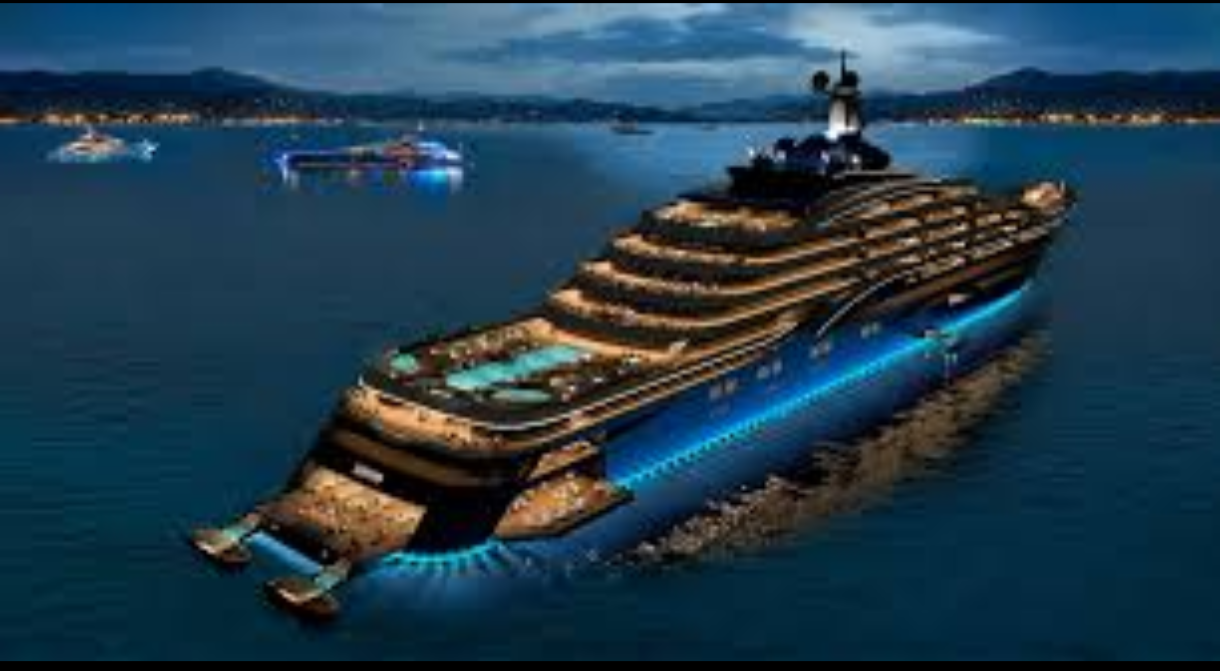
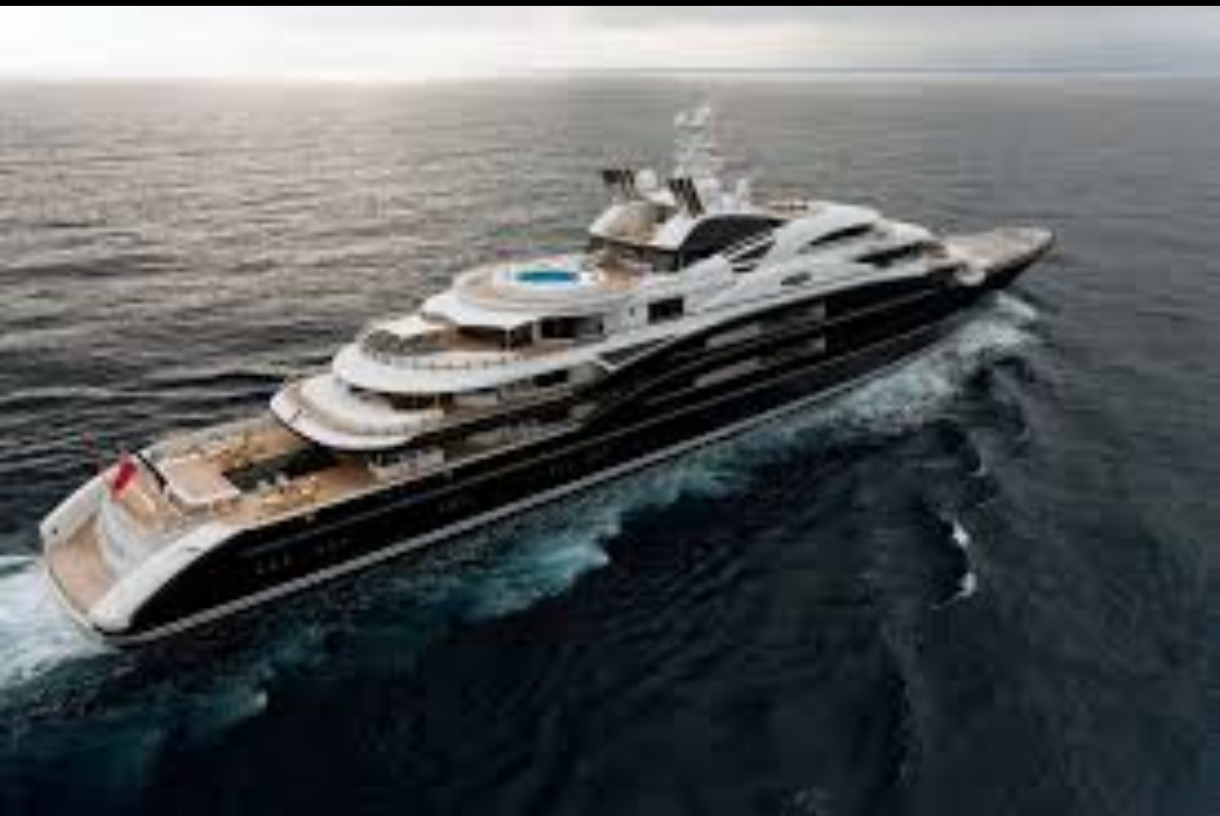
Here's a curated list of the top 10 luxury yachts as of 2025, highlighting their models, key specifications, owners, estimated prices, and notable features:
---
1. History Supreme
Length: 100 ft
Builder: Prestige Projects
Owner: Unconfirmed
Estimated Price: $4.5 billion
Notable Features: Adorned with gold and platinum, includes a statue made from meteorite, and a 24-carat gold aquarium.
2. Eclipse
Length: 533 ft
Builder: Blohm+Voss
Owner: Roman Abramovich
Estimated Price: $1.5 billion
Notable Features: Two helipads, missile defense system, bulletproof master suite, and an anti-paparazzi laser shield.
3. Azzam
Length: 590 ft
Builder: Lürssen
Owner: Sheikh Khalifa bin Zayed Al Nahyan
Estimated Price: $600 million
Notable Features: World's largest private yacht, bulletproof windows, missile defense system, and luxurious interiors designed by Christophe Leoni.
4. Dilbar
Length: 512 ft
Builder: Lürssen
Owner: Alisher Usmanov
Estimated Price: $600 million
Notable Features: Largest yacht by gross tonnage, features the largest indoor swimming pool ever installed on a yacht, two helipads, and opulent interiors.
5. Al Said
Length: 508 ft
Builder: Lürssen
Owner: Sultan of Oman
Estimated Price: $500 million
Notable Features: Private concert hall for a 50-piece orchestra, luxurious accommodations, and a crew of 140.
6. Blue
Length: 524 ft
Builder: Lürssen
Owner: Sheikh Mansour bin Zayed Al Nahyan
Estimated Price: $600 million
Notable Features: Modern design with luxurious amenities; delivered in 2022.
7. Serene
Length: 439 ft
Builder: Fincantieri
Owner: Mohammed bin Salman
Estimated Price: $550 million
Notable Features: Seawater pool, underwater viewing room, nightclub, spa, and helipad.
8. Sailing Yacht A
Length: 468 ft
Builder: ******* iskrug
Owner: Andrey Melnichenko
Estimated Price: $578 million
Notable Features: Hybrid sail-assisted motor yacht, underwater observation pod, and advanced sailing technology.
9. Dubai
Length: 531 ft
Builder: Platinum Yachts
Owner: Mohammed bin Rashid Al Maktoum
Estimated Price: $400 million
Notable Features: Jacuzzis, a massive pool, discotheque, and a submarine.
10. Koru
Length: 417 ft
Builder: Oceanco
Owner: Jeff Bezos
Estimated Price: $500 million
Notable Features: Three-masted sailing yacht, the world's tallest sailing yacht, accompanied by a 246-foot support vessel named Abeona.
---
1. History Supreme
Length: 100 ft
Builder: Prestige Projects
Owner: Unconfirmed
Estimated Price: $4.5 billion
Notable Features: Adorned with gold and platinum, includes a statue made from meteorite, and a 24-carat gold aquarium.
2. Eclipse
Length: 533 ft
Builder: Blohm+Voss
Owner: Roman Abramovich
Estimated Price: $1.5 billion
Notable Features: Two helipads, missile defense system, bulletproof master suite, and an anti-paparazzi laser shield.
3. Azzam
Length: 590 ft
Builder: Lürssen
Owner: Sheikh Khalifa bin Zayed Al Nahyan
Estimated Price: $600 million
Notable Features: World's largest private yacht, bulletproof windows, missile defense system, and luxurious interiors designed by Christophe Leoni.
4. Dilbar
Length: 512 ft
Builder: Lürssen
Owner: Alisher Usmanov
Estimated Price: $600 million
Notable Features: Largest yacht by gross tonnage, features the largest indoor swimming pool ever installed on a yacht, two helipads, and opulent interiors.
5. Al Said
Length: 508 ft
Builder: Lürssen
Owner: Sultan of Oman
Estimated Price: $500 million
Notable Features: Private concert hall for a 50-piece orchestra, luxurious accommodations, and a crew of 140.
6. Blue
Length: 524 ft
Builder: Lürssen
Owner: Sheikh Mansour bin Zayed Al Nahyan
Estimated Price: $600 million
Notable Features: Modern design with luxurious amenities; delivered in 2022.
7. Serene
Length: 439 ft
Builder: Fincantieri
Owner: Mohammed bin Salman
Estimated Price: $550 million
Notable Features: Seawater pool, underwater viewing room, nightclub, spa, and helipad.
8. Sailing Yacht A
Length: 468 ft
Builder: ******* iskrug
Owner: Andrey Melnichenko
Estimated Price: $578 million
Notable Features: Hybrid sail-assisted motor yacht, underwater observation pod, and advanced sailing technology.
9. Dubai
Length: 531 ft
Builder: Platinum Yachts
Owner: Mohammed bin Rashid Al Maktoum
Estimated Price: $400 million
Notable Features: Jacuzzis, a massive pool, discotheque, and a submarine.
10. Koru
Length: 417 ft
Builder: Oceanco
Owner: Jeff Bezos
Estimated Price: $500 million
Notable Features: Three-masted sailing yacht, the world's tallest sailing yacht, accompanied by a 246-foot support vessel named Abeona.


1 yr. ago
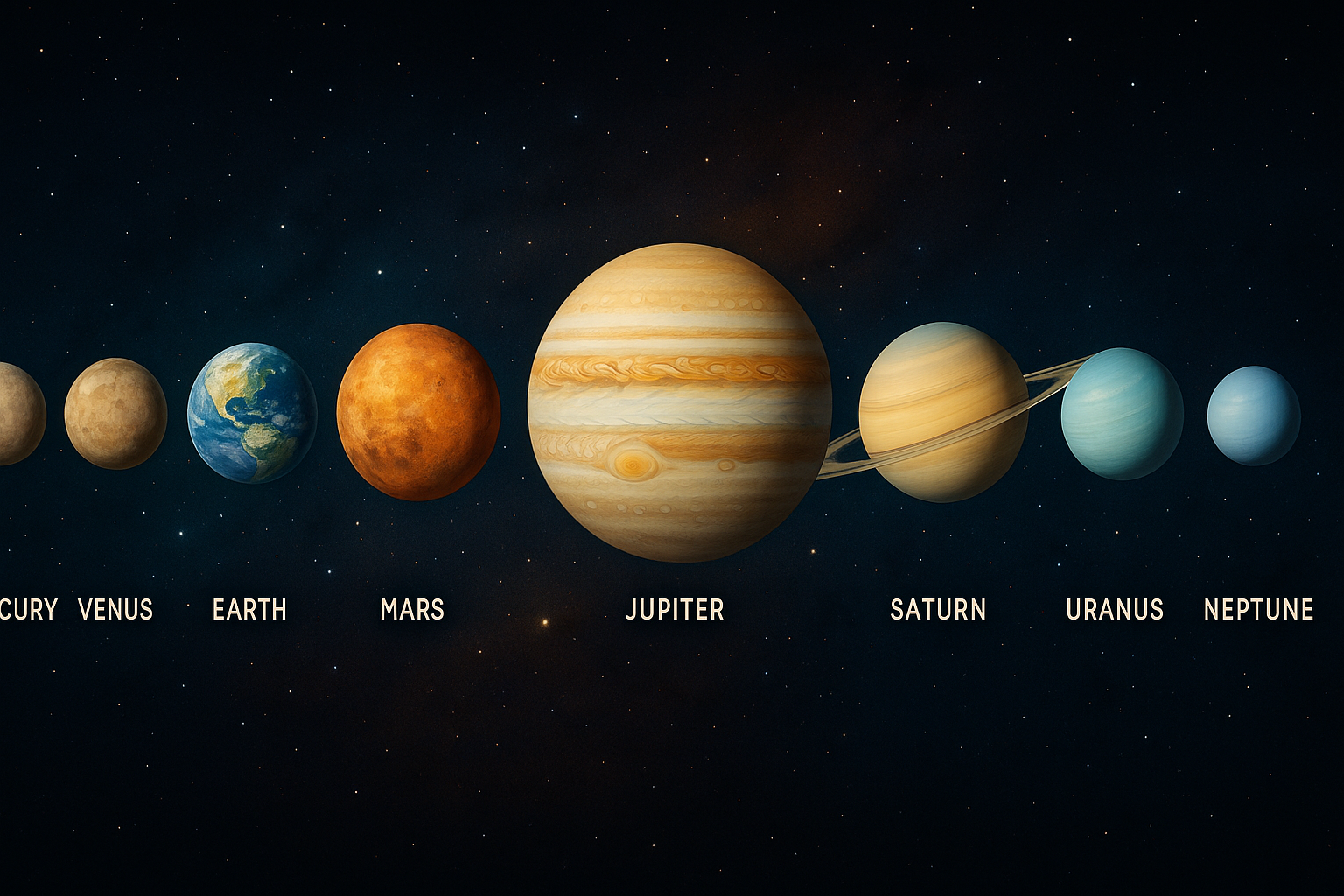
As of now, our solar system has 8 officially recognized planets:
1. Mercury
2. Venus
3. Earth
4. Mars
5. Jupiter
6. Saturn
7. Uranus
8. Neptune
---
❓ What About Pluto?
Pluto was classified as the 9th planet until 2006, when the International Astronomical Union (IAU) reclassified it as a "dwarf planet" due to its small size and irregular orbit.
---
🪐 Dwarf Planets
In addition to Pluto, there are several recognized dwarf planets, including:
Ceres (in the asteroid belt)
Eris
Makemake
Haumea
These are not counted among the main planets.
---
So: 8 planets, plus several dwarf planets.
1. Mercury
2. Venus
3. Earth
4. Mars
5. Jupiter
6. Saturn
7. Uranus
8. Neptune
---
❓ What About Pluto?
Pluto was classified as the 9th planet until 2006, when the International Astronomical Union (IAU) reclassified it as a "dwarf planet" due to its small size and irregular orbit.
---
🪐 Dwarf Planets
In addition to Pluto, there are several recognized dwarf planets, including:
Ceres (in the asteroid belt)
Eris
Makemake
Haumea
These are not counted among the main planets.
---
So: 8 planets, plus several dwarf planets.
1 yr. ago
Bitcoin (BTC) daily ***** ysis and 3 days forecast
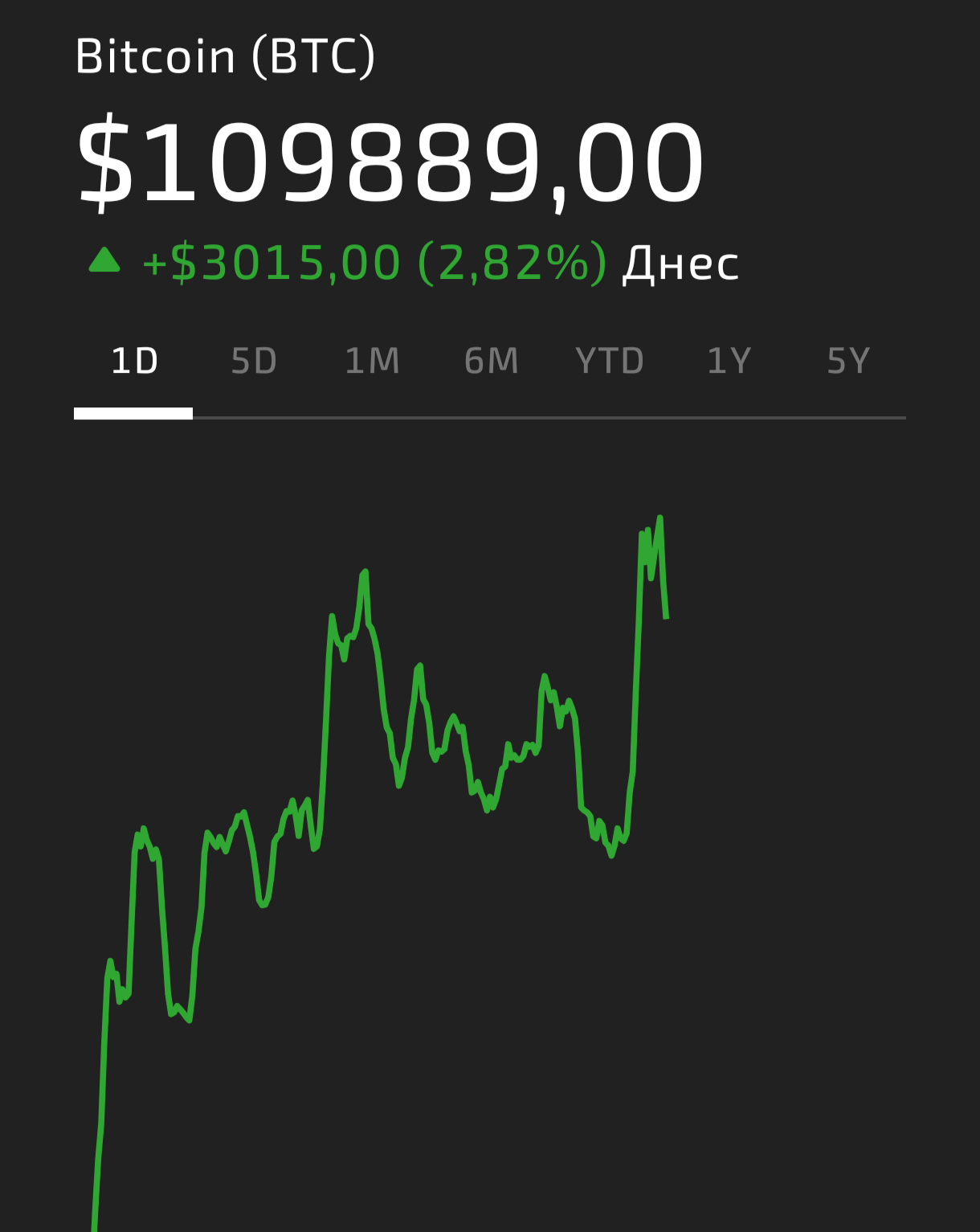
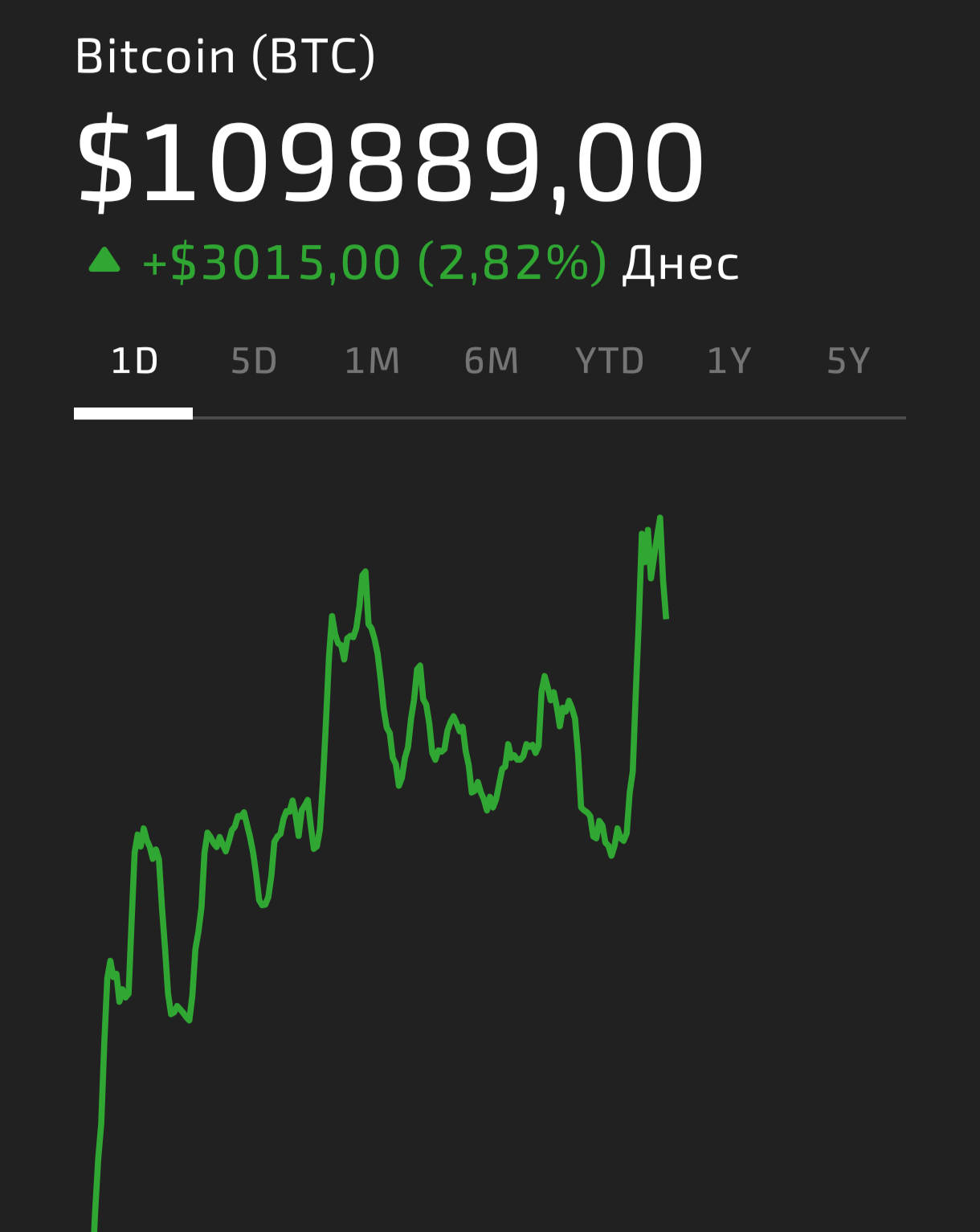
As of May 26, 2025, Bitcoin (BTC) is trading at approximately $109,889, reflecting a 2.8% increase for the day. This surge follows a recent all-time high of $111,332 achieved on May 23, with the price briefly dipping to $107,683 before rebounding.
Short-Term Outlook (Next 3 Days)
Forecasts suggest that Bitcoin's price will remain relatively stable over the next few days, with slight upward momentum:
May 27: Projected to reach around $110,326.
May 28: Expected to hover near $110,415.
These projections indicate a continuation of the current bullish trend, albeit with modest gains.
Market Drivers
Several factors are contributing to Bitcoin's current performance:
Institutional Investment: Companies like Strategy have made significant purchases, acquiring 4,020 BTC for $427 million, signaling strong institutional confidence.
Macroeconomic Factors: The postponement of U.S. tariffs on EU imports has alleviated market tensions, encouraging investment in risk ***** ets like cryptocurrencies.
Technical Indicators: Despite some signs of short-term exhaustion, Bitcoin remains within a rising channel formation, suggesting potential for further gains if key support levels hold.
Key Levels to Watch
Support: $107,000 and $100,000 are critical support levels. A drop below these could signal a shift in market sentiment.
Resistance: The $113,000–$115,000 range is a significant resistance zone. Breaking through this could pave the way for further upward movement.
Conclusion
Bitcoin is currently exhibiting strong performance, supported by institutional investments and favorable macroeconomic conditions. While short-term projections indicate modest gains, investors should remain vigilant of key support and resistance levels to navigate potential volatility.
As of May 26, 2025, Bitcoin (BTC) is trading at approximately $109,889, reflecting a 2.8% increase for the day. This surge follows a recent all-time high of $111,332 achieved on May 23, with the price briefly dipping to $107,683 before rebounding.
Short-Term Outlook (Next 3 Days)
Forecasts suggest that Bitcoin's price will remain relatively stable over the next few days, with slight upward momentum:
May 27: Projected to reach around $110,326.
May 28: Expected to hover near $110,415.
These projections indicate a continuation of the current bullish trend, albeit with modest gains.
Market Drivers
Several factors are contributing to Bitcoin's current performance:
Institutional Investment: Companies like Strategy have made significant purchases, acquiring 4,020 BTC for $427 million, signaling strong institutional confidence.
Macroeconomic Factors: The postponement of U.S. tariffs on EU imports has alleviated market tensions, encouraging investment in risk ***** ets like cryptocurrencies.
Technical Indicators: Despite some signs of short-term exhaustion, Bitcoin remains within a rising channel formation, suggesting potential for further gains if key support levels hold.
Key Levels to Watch
Support: $107,000 and $100,000 are critical support levels. A drop below these could signal a shift in market sentiment.
Resistance: The $113,000–$115,000 range is a significant resistance zone. Breaking through this could pave the way for further upward movement.
Conclusion
Bitcoin is currently exhibiting strong performance, supported by institutional investments and favorable macroeconomic conditions. While short-term projections indicate modest gains, investors should remain vigilant of key support and resistance levels to navigate potential volatility.
1 yr. ago
TRON (TRX) ****** YSIS
Based on recent ****** yses, TRON (TRX) reaching $0.50 by the end of 2025 is within the realm of possibility, though it would require significant market momentum.
Current Price and Recent Trends
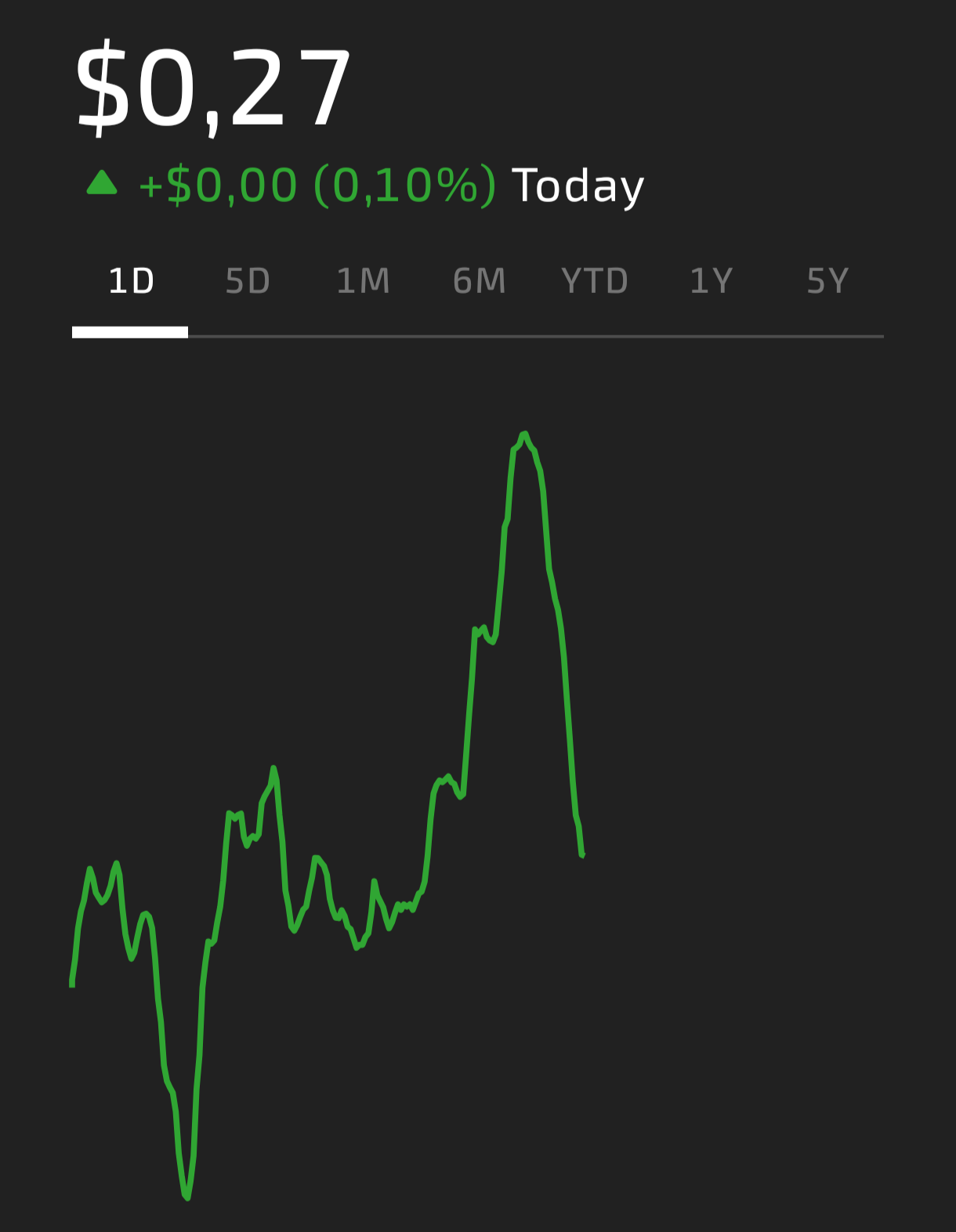
As of May 26, 2025, TRX is trading at approximately $0.27. Over the past month, it has experienced a modest increase of about 5%, indicating a stable upward trend.
End-of-Year 2025 Price Predictions
Various forecasts provide a range of potential outcomes for TRX's price by December 2025:
DigitalCoinPrice: Predicts TRX could reach between $0.47 and $0.50.
LongForecast.com: Projects a high of $0.65, suggesting a bullish outlook.
MarketTalkz: Estimates a range between $0.42 and $0.65, with a potential average around $0.53.
CoinSurges: Suggests TRX could sustain above $0.70, potentially reaching up to $0.73.
PricePrediction.net: Offers a more conservative estimate, with a maximum price of $0.3016.
Community Sentiment
Discussions among TRX investors reflect cautious optimism. Some community members believe that, while $0.50 is achievable, it would require sustained bullish momentum and favorable market conditions.
Conclusion
Considering the current price and various forecasts, TRX reaching $0.50 by the end of 2025 is plausible but would depend on continued positive market trends and broader adoption. Investors should remain aware of the inherent volatility in cryptocurrency markets and conduct thorough research before making investment decisions.
Based on recent ****** yses, TRON (TRX) reaching $0.50 by the end of 2025 is within the realm of possibility, though it would require significant market momentum.
Current Price and Recent Trends
As of May 26, 2025, TRX is trading at approximately $0.27. Over the past month, it has experienced a modest increase of about 5%, indicating a stable upward trend.
End-of-Year 2025 Price Predictions
Various forecasts provide a range of potential outcomes for TRX's price by December 2025:
DigitalCoinPrice: Predicts TRX could reach between $0.47 and $0.50.
LongForecast.com: Projects a high of $0.65, suggesting a bullish outlook.
MarketTalkz: Estimates a range between $0.42 and $0.65, with a potential average around $0.53.
CoinSurges: Suggests TRX could sustain above $0.70, potentially reaching up to $0.73.
PricePrediction.net: Offers a more conservative estimate, with a maximum price of $0.3016.
Community Sentiment
Discussions among TRX investors reflect cautious optimism. Some community members believe that, while $0.50 is achievable, it would require sustained bullish momentum and favorable market conditions.
Conclusion
Considering the current price and various forecasts, TRX reaching $0.50 by the end of 2025 is plausible but would depend on continued positive market trends and broader adoption. Investors should remain aware of the inherent volatility in cryptocurrency markets and conduct thorough research before making investment decisions.
1 yr. ago
Gold price forecasts : As of May 20, 2025, gold prices are experiencing a short-term correction, trading between $3,050 and $3,250 per ounce in Q2. **** ysts suggest that prices could potentially drop to Rs 88,000 per 10 grams, influenced by reduced expectations for US rate cuts and diminished trade war concerns.
Looking ahead, forecasts indicate a bullish trend for gold in the latter half of 2025. Goldman Sachs predicts prices could rise to $3,700 per ounce by year-end, driven by central bank purchases and investor demand amid economic uncertainties. CoinCodex anticipates a peak around $4,147.95 by December 2025, with an average of $3,569.97 for the year.
In summary, while short-term fluctuations are expected, the overall outlook for gold over the next six months remains positive, supported by macroeconomic factors and investor sentiment.
Looking ahead, forecasts indicate a bullish trend for gold in the latter half of 2025. Goldman Sachs predicts prices could rise to $3,700 per ounce by year-end, driven by central bank purchases and investor demand amid economic uncertainties. CoinCodex anticipates a peak around $4,147.95 by December 2025, with an average of $3,569.97 for the year.
In summary, while short-term fluctuations are expected, the overall outlook for gold over the next six months remains positive, supported by macroeconomic factors and investor sentiment.

1 yr. ago
Crypto Market Outlook (May 20–26, 2025):
1. Bitcoin (BTC):
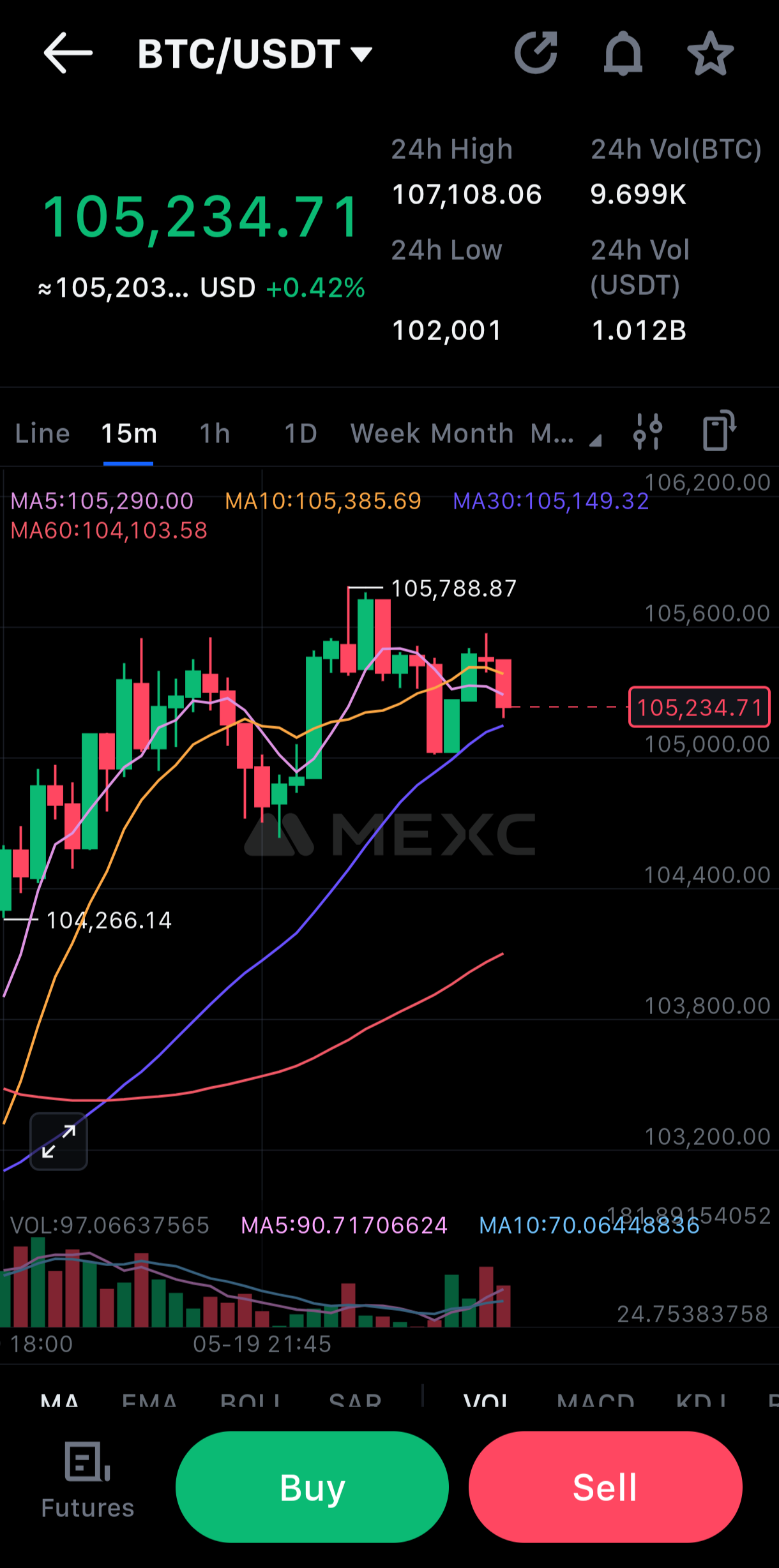
BTC is currently consolidating around the $65,000–$68,000 range after last week’s mild rally. Watch for a potential breakout above $68K, which could signal a move toward $72K. Support is strong around $63K. A dip below this may trigger short-term bearish pressure.
2. Ethereum (ETH):
ETH remains strong around $3,500, supported by increasing DeFi activity and ETF approval rumors. A push above $3,600 could open the door to $3,800. Caution if it falls under $3,300.
3. Altcoins to Watch:
Solana (SOL): Gaining strength above $160, with potential to retest $180 if momentum continues.
Pepe (PEPE): Meme coin sentiment remains hot; high risk but bullish bias continues unless BTC corrects sharply.
Arbitrum (ARB): Seeing rising interest due to new dApp launches. Could rebound from current lows.
4. Macro Factors:
U.S. Fed comments mid-week may influence risk appetite.
ETF speculation and regulatory headlines remain key price drivers.
5. Sentiment:
Market sentiment is cautiously bullish. Fear & Greed Index is leaning toward "Greed," suggesting potential for volatility spikes.
1. Bitcoin (BTC):
BTC is currently consolidating around the $65,000–$68,000 range after last week’s mild rally. Watch for a potential breakout above $68K, which could signal a move toward $72K. Support is strong around $63K. A dip below this may trigger short-term bearish pressure.
2. Ethereum (ETH):
ETH remains strong around $3,500, supported by increasing DeFi activity and ETF approval rumors. A push above $3,600 could open the door to $3,800. Caution if it falls under $3,300.
3. Altcoins to Watch:
Solana (SOL): Gaining strength above $160, with potential to retest $180 if momentum continues.
Pepe (PEPE): Meme coin sentiment remains hot; high risk but bullish bias continues unless BTC corrects sharply.
Arbitrum (ARB): Seeing rising interest due to new dApp launches. Could rebound from current lows.
4. Macro Factors:
U.S. Fed comments mid-week may influence risk appetite.
ETF speculation and regulatory headlines remain key price drivers.
5. Sentiment:
Market sentiment is cautiously bullish. Fear & Greed Index is leaning toward "Greed," suggesting potential for volatility spikes.
2 yr. ago
Reducing a ship's emissions is critical for improving air quality and mitigating climate change. The shipping industry is responsible for a significant portion of global greenhouse gas emissions, including CO2, NOx, and sulfur oxides (SOx). Several strategies, both technological and operational, can be employed to reduce ship emissions. Here's an overview:
1. Switch to Cleaner Fuels
Low-Sulfur Fuels: The International Maritime Organization (IMO) has implemented regulations to reduce sulfur emissions. Ships can use low-sulfur fuels (like Very Low Sulfur Fuel Oil - VLSFO) instead of traditional high-sulfur bunker fuel.
Liquefied Natural Gas (LNG): LNG is a cleaner alternative to conventional marine fuels as it significantly reduces emissions of CO2, sulfur oxides (SOx), and nitrogen oxides (NOx).
Biofuels: Some ships are beginning to use biofuels made from renewable sources like algae, waste oils, or plant-based materials, which have a lower carbon footprint.
Ammonia and Hydrogen: Though still in the experimental stage, ammonia and hydrogen have the potential to be carbon-free fuels when produced from renewable sources.
2. Energy Efficiency Measures
Hull Design & Maintenance: Modern hull designs, such as those with smoother surfaces and more hydrodynamic shapes, can reduce drag and fuel consumption. Regular cleaning and maintenance of the hull can also help maintain fuel efficiency.
Energy-saving Devices (ESDs): These include air bubble systems, ducts, and fins that improve the flow of water around the ship, reducing resistance and energy consumption.
Wind Propulsion Technologies: Technologies like sails, kite sails, and rotor sails harness wind energy to reduce the reliance on engines and reduce fuel consumption.
Energy-Efficient Engines: Newer, more efficient engines consume less fuel and emit fewer pollutants. Engine tuning, regular maintenance, and using low-load engines (engines optimized for slower speeds) can also improve energy efficiency.
3. Use of Scrubbers and Exhaust Gas Cleaning Systems
Scrubbers: These are devices installed on the exhaust stacks to remove sulfur oxides (SOx) and other pollutants from ship emissions. Scrubbers can clean exhaust gases, allowing ships to burn higher sulfur content fuel while meeting emission regulations.
Exhaust Gas Recirculation (EGR): EGR systems reduce NOx emissions by recirculating part of the exhaust back into the combustion chamber, reducing the formation of NOx during combustion.
4. Operational Efficiency and Best Practices
Slow Steaming: Reducing the speed of a ship, a practice known as slow steaming, reduces fuel consumption and emissions. Lower speeds also decrease the energy required to overcome hydrodynamic resistance.
Weather Routing: Using weather data and forecasting tools to optimize a ship's route can reduce fuel consumption and emissions by avoiding adverse weather conditions (e.g., headwinds) and taking advantage of favorable currents.
Port Time Optimization: Efficient port operations, such as reducing the time ships spend waiting at ports or idling, can also lower emissions. Strategies like cold ironing (using shore power while docked) allow ships to turn off engines while in port, reducing the use of auxiliary engines that produce emissions.
5. Carbon Capture and Storage (CCS)
Though still in the early stages, the concept of carbon capture and storage for ships involves capturing CO2 emissions from the exhaust gases and storing them safely, preventing their release into the atmosphere. This is still an emerging technology for the maritime industry.
6. Alternative Propulsion Technologies
Electric Propulsion: The use of batteries or fuel cells for electric propulsion is gaining attention, especially for short-sea shipping and ferries. These vessels rely on electricity stored in batteries or generated on board through renewable energy sources.
Hybrid Systems: Hybrid propulsion systems combine traditional internal combustion engines with batteries or fuel cells, allowing for reduced emissions during certain parts of the voyage (e.g., port entry, and docking).
7. Compliance with International Regulations
IMO 2020 Regulation: The International Maritime Organization (IMO) introduced the IMO 2020 sulfur cap, which limits the sulfur content in marine fuels to 0.5% globally (down from 3.5%). This has encouraged the use of low-sulfur fuels or the installation of scrubbers.
IMO’s GHG Strategy: The IMO has set a goal to reduce greenhouse gas emissions from shipping by at least 50% by 2050 (compared to 2008 levels). This includes measures such as reducing carbon intensity (CO2 per ton-mile) and encouraging the use of zero-emission fuels.
8. Research and Development of Innovative Technologies
Investment in R&D for new technologies, including carbon-neutral fuels, improved propulsion systems, and advanced emissions abatement technologies, will be essential to achieving long-term reductions in ship emissions.
Collaborative efforts between shipping companies, fuel suppliers, technology providers, and regulatory bodies can speed up the development of these innovations.
Reducing ship emissions involves a combination of technological advancements, operational efficiencies, and the use of cleaner fuels. The maritime industry is increasingly moving toward a sustainable future, driven by stricter environmental regulations and the growing demand for environmentally responsible practices. By adopting these strategies, the shipping industry can significantly reduce its environmental footprint and contribute to global efforts in tackling climate change.
https://www.goltens.com/pr...
1. Switch to Cleaner Fuels
Low-Sulfur Fuels: The International Maritime Organization (IMO) has implemented regulations to reduce sulfur emissions. Ships can use low-sulfur fuels (like Very Low Sulfur Fuel Oil - VLSFO) instead of traditional high-sulfur bunker fuel.
Liquefied Natural Gas (LNG): LNG is a cleaner alternative to conventional marine fuels as it significantly reduces emissions of CO2, sulfur oxides (SOx), and nitrogen oxides (NOx).
Biofuels: Some ships are beginning to use biofuels made from renewable sources like algae, waste oils, or plant-based materials, which have a lower carbon footprint.
Ammonia and Hydrogen: Though still in the experimental stage, ammonia and hydrogen have the potential to be carbon-free fuels when produced from renewable sources.
2. Energy Efficiency Measures
Hull Design & Maintenance: Modern hull designs, such as those with smoother surfaces and more hydrodynamic shapes, can reduce drag and fuel consumption. Regular cleaning and maintenance of the hull can also help maintain fuel efficiency.
Energy-saving Devices (ESDs): These include air bubble systems, ducts, and fins that improve the flow of water around the ship, reducing resistance and energy consumption.
Wind Propulsion Technologies: Technologies like sails, kite sails, and rotor sails harness wind energy to reduce the reliance on engines and reduce fuel consumption.
Energy-Efficient Engines: Newer, more efficient engines consume less fuel and emit fewer pollutants. Engine tuning, regular maintenance, and using low-load engines (engines optimized for slower speeds) can also improve energy efficiency.
3. Use of Scrubbers and Exhaust Gas Cleaning Systems
Scrubbers: These are devices installed on the exhaust stacks to remove sulfur oxides (SOx) and other pollutants from ship emissions. Scrubbers can clean exhaust gases, allowing ships to burn higher sulfur content fuel while meeting emission regulations.
Exhaust Gas Recirculation (EGR): EGR systems reduce NOx emissions by recirculating part of the exhaust back into the combustion chamber, reducing the formation of NOx during combustion.
4. Operational Efficiency and Best Practices
Slow Steaming: Reducing the speed of a ship, a practice known as slow steaming, reduces fuel consumption and emissions. Lower speeds also decrease the energy required to overcome hydrodynamic resistance.
Weather Routing: Using weather data and forecasting tools to optimize a ship's route can reduce fuel consumption and emissions by avoiding adverse weather conditions (e.g., headwinds) and taking advantage of favorable currents.
Port Time Optimization: Efficient port operations, such as reducing the time ships spend waiting at ports or idling, can also lower emissions. Strategies like cold ironing (using shore power while docked) allow ships to turn off engines while in port, reducing the use of auxiliary engines that produce emissions.
5. Carbon Capture and Storage (CCS)
Though still in the early stages, the concept of carbon capture and storage for ships involves capturing CO2 emissions from the exhaust gases and storing them safely, preventing their release into the atmosphere. This is still an emerging technology for the maritime industry.
6. Alternative Propulsion Technologies
Electric Propulsion: The use of batteries or fuel cells for electric propulsion is gaining attention, especially for short-sea shipping and ferries. These vessels rely on electricity stored in batteries or generated on board through renewable energy sources.
Hybrid Systems: Hybrid propulsion systems combine traditional internal combustion engines with batteries or fuel cells, allowing for reduced emissions during certain parts of the voyage (e.g., port entry, and docking).
7. Compliance with International Regulations
IMO 2020 Regulation: The International Maritime Organization (IMO) introduced the IMO 2020 sulfur cap, which limits the sulfur content in marine fuels to 0.5% globally (down from 3.5%). This has encouraged the use of low-sulfur fuels or the installation of scrubbers.
IMO’s GHG Strategy: The IMO has set a goal to reduce greenhouse gas emissions from shipping by at least 50% by 2050 (compared to 2008 levels). This includes measures such as reducing carbon intensity (CO2 per ton-mile) and encouraging the use of zero-emission fuels.
8. Research and Development of Innovative Technologies
Investment in R&D for new technologies, including carbon-neutral fuels, improved propulsion systems, and advanced emissions abatement technologies, will be essential to achieving long-term reductions in ship emissions.
Collaborative efforts between shipping companies, fuel suppliers, technology providers, and regulatory bodies can speed up the development of these innovations.
Reducing ship emissions involves a combination of technological advancements, operational efficiencies, and the use of cleaner fuels. The maritime industry is increasingly moving toward a sustainable future, driven by stricter environmental regulations and the growing demand for environmentally responsible practices. By adopting these strategies, the shipping industry can significantly reduce its environmental footprint and contribute to global efforts in tackling climate change.
https://www.goltens.com/pr...

2 yr. ago
First steps ang guidance to save life in case of a hearth attack
If you suspect someone is having a heart attack, acting quickly is critical to saving their life. Here's a step-by-step guide on what to do in case of a heart attack:
1. Call Emergency Services Immediately (911 or your local emergency number)
Time is critical during a heart attack. The sooner medical help arrives, the better the chances of survival and reducing damage to the heart.
Make sure you provide the operator with clear details: the person’s symptoms, age, and condition. If possible, have someone else call while you ****** ist the victim.
2. Help the Person Stay Calm and Rest
Encourage the person to sit down and stay calm. Reassure them that help is on the way.
Avoid exertion, as physical activity can worsen the heart attack.
3. Chew Aspirin (If the Person is Not Allergic)
Give the person aspirin if they are conscious and not allergic to it. Aspirin helps thin the blood and can reduce the severity of a heart attack.
Dosage: A typical dose is 325 mg (one regular aspirin or four 81 mg baby aspirin). Let the person chew it slowly rather than swallowing it whole, as this speeds absorption.
4. Perform CPR if the Person Becomes Unconscious
If the person loses consciousness and is not breathing, start CPR immediately.
Chest Compressions: Place your hands in the center of the chest and push down hard and fast (about 2 inches deep at a rate of 100-120 compressions per minute).
If you're trained, provide rescue breaths after every 30 compressions (mouth-to-mouth or using a face shield if available).
If you're untrained or unsure, just perform hands-only CPR (chest compressions) until help arrives.
5. Use an AED if Available
If there’s an automated external defibrillator (AED) nearby, turn it on and follow the instructions. It can deliver a shock to restore a normal heart rhythm if necessary.
6. Monitor the Person’s Condition
Stay with the person, keep them as calm as possible, and continue to monitor their breathing and heart rate until medical help arrives.
Key Symptoms of a Heart Attack to Watch For:
Chest pain or discomfort (often a feeling of pressure, tightness, or squeezing)
Pain in the upper body (arms, back, neck, jaw, or stomach)
Shortness of breath
Nausea or lightheadedness
Cold sweat or dizziness
Remember that time is muscle: The quicker medical help is received, the better the outcome. Immediate action can prevent heart muscle damage and save lives.
If you suspect someone is having a heart attack, acting quickly is critical to saving their life. Here's a step-by-step guide on what to do in case of a heart attack:
1. Call Emergency Services Immediately (911 or your local emergency number)
Time is critical during a heart attack. The sooner medical help arrives, the better the chances of survival and reducing damage to the heart.
Make sure you provide the operator with clear details: the person’s symptoms, age, and condition. If possible, have someone else call while you ****** ist the victim.
2. Help the Person Stay Calm and Rest
Encourage the person to sit down and stay calm. Reassure them that help is on the way.
Avoid exertion, as physical activity can worsen the heart attack.
3. Chew Aspirin (If the Person is Not Allergic)
Give the person aspirin if they are conscious and not allergic to it. Aspirin helps thin the blood and can reduce the severity of a heart attack.
Dosage: A typical dose is 325 mg (one regular aspirin or four 81 mg baby aspirin). Let the person chew it slowly rather than swallowing it whole, as this speeds absorption.
4. Perform CPR if the Person Becomes Unconscious
If the person loses consciousness and is not breathing, start CPR immediately.
Chest Compressions: Place your hands in the center of the chest and push down hard and fast (about 2 inches deep at a rate of 100-120 compressions per minute).
If you're trained, provide rescue breaths after every 30 compressions (mouth-to-mouth or using a face shield if available).
If you're untrained or unsure, just perform hands-only CPR (chest compressions) until help arrives.
5. Use an AED if Available
If there’s an automated external defibrillator (AED) nearby, turn it on and follow the instructions. It can deliver a shock to restore a normal heart rhythm if necessary.
6. Monitor the Person’s Condition
Stay with the person, keep them as calm as possible, and continue to monitor their breathing and heart rate until medical help arrives.
Key Symptoms of a Heart Attack to Watch For:
Chest pain or discomfort (often a feeling of pressure, tightness, or squeezing)
Pain in the upper body (arms, back, neck, jaw, or stomach)
Shortness of breath
Nausea or lightheadedness
Cold sweat or dizziness
Remember that time is muscle: The quicker medical help is received, the better the outcome. Immediate action can prevent heart muscle damage and save lives.

2 yr. ago
Here’s a simplified explanation of how air conditioning (AC) works to keep your ******* e cool and comfortable:
Basic Principle of Air Conditioning:
An air conditioner cools indoor air by transferring heat from the inside of a building to the outside, using a process called heat exchange. Essentially, it moves warm air out and circulates cooler air in, creating a comfortable indoor environment.
Key Components of an Air Conditioner:
Refrigerant:
The refrigerant is a special fluid (often gas or liquid) that absorbs and releases heat as it circulates through the air conditioner. It goes through a cycle of evaporating and condensing to facilitate this process.
Compressor:
The compressor is usually located outside the building, and it pumps the refrigerant gas under high pressure. When the refrigerant is compressed, it heats up significantly.
Condenser Coil (outside unit):
The condenser coil releases the heat that was absorbed by the refrigerant. As the hot, high-pressure refrigerant gas moves through the condenser coil (which is located in the outdoor unit), it cools down and condenses into a liquid.
Expansion Valve:
The expansion valve (also known as a metering device) is located between the condenser and the evaporator. It regulates the flow of the refrigerant into the evaporator, causing it to expand and lose pressure. This allows the refrigerant to cool down further before it enters the evaporator coil.
Evaporator Coil (indoor unit):
The evaporator coil is located inside the building, usually in the air handler or the furnace unit. Here, the cooled refrigerant absorbs heat from the indoor air. As the refrigerant evaporates (changes from liquid to gas), it absorbs heat, thus cooling the air around the coil.
Blower Fan:
The blower fan pushes warm indoor air over the evaporator coils. As air passes over the coils, it cools down, and the now-cooler air is blown back into the room or ******* e.
Thermostat:
The thermostat senses the temperature of the air and adjusts the operation of the air conditioning system. When the room reaches the desired temperature, the thermostat signals the system to turn off.
How the Process Works Step by Step:
Warm Air is Drawn In:
Warm air from the room is sucked into the air conditioner through a return vent.
Cooling the Air:
The air passes over the evaporator coil, which contains cold refrigerant. As the warm air flows over the coil, the refrigerant inside absorbs the heat, cooling the air. The now-cool air is then blown back into the room by the blower fan.
Heat Absorbed by Refrigerant:
Inside the evaporator coil, the refrigerant absorbs heat from the warm air, causing the refrigerant to evaporate (turn from liquid to gas).
Refrigerant Moves to the Compressor:
The refrigerant gas is then pumped to the compressor located in the outdoor unit, where it is compressed under high pressure. This increases the temperature of the refrigerant gas.
Heat is Released Outside:
The high-pressure, hot refrigerant gas then moves to the condenser coil, which is located outside. As the gas passes through the condenser, it cools down and condenses back into a liquid. The heat absorbed from inside the building is released into the outdoor air.
Cooling Cycle Repeats:
The cooled liquid refrigerant is then allowed to expand through the expansion valve, which lowers its pressure and temperature even more before it enters the evaporator coil to absorb heat again, repeating the cycle.
Summary of the Cooling Cycle:
Evaporation: Refrigerant absorbs heat from inside air and evaporates.
Compression: The refrigerant gas is compressed, increasing its pressure and temperature.
Condensation: The refrigerant releases heat outside and turns back into a liquid.
Expansion: The refrigerant loses pressure and temperature, preparing to absorb more heat.
This continuous cycle keeps the indoor air cool, while the air conditioner expels the absorbed heat to the outside.
Why the Process Works:
The cooling effect of air conditioning comes from the phase change of the refrigerant. When the refrigerant changes from a liquid to a gas (and vice versa), it absorbs and releases heat. This process of heat transfer is what makes your indoor ******* e cooler.
Energy Efficiency and Cooling:
The energy consumption of an air conditioner is largely dependent on how efficiently it can transfer heat from inside to outside. Modern air conditioners are designed to do this in the most efficient way possible, often using less energy than older models, thanks to improved refrigerants, better insulation, and optimized components.
The temperature setting on the thermostat controls how long the air conditioner runs. For example, setting it at a cooler temperature requires the system to work harder to keep the room cool, using more energy.
In Summary:
Air conditioners work by using a refrigerant that absorbs heat from the indoor air, turning it into a gas, then compressing and cooling that gas to release the heat outdoors. The system circulates cool air back into the ******* e, keeping things comfortable.
Basic Principle of Air Conditioning:
An air conditioner cools indoor air by transferring heat from the inside of a building to the outside, using a process called heat exchange. Essentially, it moves warm air out and circulates cooler air in, creating a comfortable indoor environment.
Key Components of an Air Conditioner:
Refrigerant:
The refrigerant is a special fluid (often gas or liquid) that absorbs and releases heat as it circulates through the air conditioner. It goes through a cycle of evaporating and condensing to facilitate this process.
Compressor:
The compressor is usually located outside the building, and it pumps the refrigerant gas under high pressure. When the refrigerant is compressed, it heats up significantly.
Condenser Coil (outside unit):
The condenser coil releases the heat that was absorbed by the refrigerant. As the hot, high-pressure refrigerant gas moves through the condenser coil (which is located in the outdoor unit), it cools down and condenses into a liquid.
Expansion Valve:
The expansion valve (also known as a metering device) is located between the condenser and the evaporator. It regulates the flow of the refrigerant into the evaporator, causing it to expand and lose pressure. This allows the refrigerant to cool down further before it enters the evaporator coil.
Evaporator Coil (indoor unit):
The evaporator coil is located inside the building, usually in the air handler or the furnace unit. Here, the cooled refrigerant absorbs heat from the indoor air. As the refrigerant evaporates (changes from liquid to gas), it absorbs heat, thus cooling the air around the coil.
Blower Fan:
The blower fan pushes warm indoor air over the evaporator coils. As air passes over the coils, it cools down, and the now-cooler air is blown back into the room or ******* e.
Thermostat:
The thermostat senses the temperature of the air and adjusts the operation of the air conditioning system. When the room reaches the desired temperature, the thermostat signals the system to turn off.
How the Process Works Step by Step:
Warm Air is Drawn In:
Warm air from the room is sucked into the air conditioner through a return vent.
Cooling the Air:
The air passes over the evaporator coil, which contains cold refrigerant. As the warm air flows over the coil, the refrigerant inside absorbs the heat, cooling the air. The now-cool air is then blown back into the room by the blower fan.
Heat Absorbed by Refrigerant:
Inside the evaporator coil, the refrigerant absorbs heat from the warm air, causing the refrigerant to evaporate (turn from liquid to gas).
Refrigerant Moves to the Compressor:
The refrigerant gas is then pumped to the compressor located in the outdoor unit, where it is compressed under high pressure. This increases the temperature of the refrigerant gas.
Heat is Released Outside:
The high-pressure, hot refrigerant gas then moves to the condenser coil, which is located outside. As the gas passes through the condenser, it cools down and condenses back into a liquid. The heat absorbed from inside the building is released into the outdoor air.
Cooling Cycle Repeats:
The cooled liquid refrigerant is then allowed to expand through the expansion valve, which lowers its pressure and temperature even more before it enters the evaporator coil to absorb heat again, repeating the cycle.
Summary of the Cooling Cycle:
Evaporation: Refrigerant absorbs heat from inside air and evaporates.
Compression: The refrigerant gas is compressed, increasing its pressure and temperature.
Condensation: The refrigerant releases heat outside and turns back into a liquid.
Expansion: The refrigerant loses pressure and temperature, preparing to absorb more heat.
This continuous cycle keeps the indoor air cool, while the air conditioner expels the absorbed heat to the outside.
Why the Process Works:
The cooling effect of air conditioning comes from the phase change of the refrigerant. When the refrigerant changes from a liquid to a gas (and vice versa), it absorbs and releases heat. This process of heat transfer is what makes your indoor ******* e cooler.
Energy Efficiency and Cooling:
The energy consumption of an air conditioner is largely dependent on how efficiently it can transfer heat from inside to outside. Modern air conditioners are designed to do this in the most efficient way possible, often using less energy than older models, thanks to improved refrigerants, better insulation, and optimized components.
The temperature setting on the thermostat controls how long the air conditioner runs. For example, setting it at a cooler temperature requires the system to work harder to keep the room cool, using more energy.
In Summary:
Air conditioners work by using a refrigerant that absorbs heat from the indoor air, turning it into a gas, then compressing and cooling that gas to release the heat outdoors. The system circulates cool air back into the ******* e, keeping things comfortable.

2 yr. ago
Is it a good time to buy a real estate ?
In 2024, the global real estate market is seeing mixed trends, with regional differences playing a significant role. Key factors like inflation, interest rates, and economic growth have been influencing property prices worldwide.
Inflation and Interest Rates: Many major economies are seeing inflation cool down after aggressive interest rate hikes in 2022-2023. However, borrowing costs remain high, and real estate markets are adjusting to these elevated rates. While interest rates may peak in early 2024, they are expected to decline later in the year, making borrowing more affordable and potentially increasing real estate transactions.
Regional Variations:
Asia-Pacific: Countries like India are expected to show the strongest growth, with a vibrant real estate market as economic conditions stabilize.
Europe: Markets such as Germany are facing recession risks, and real estate prices may stagnate or even decline, particularly in the first half of the year.
United States and Australia: Both are forecast to experience steady but below-trend economic growth, with real estate prices stabilizing as economic uncertainties decrease.
Luxury Real Estate: High-end properties continue to see robust demand, especially in cities like Paris and London, although supply constraints are a challenge. The luxury market, particularly in sectors like university towns and niche residential areas, is holding up better compared to broader markets.
Overall, the 2024 real estate market is characterized by a gradual return to normalcy after pandemic-related disruptions, though the pace of growth and price changes will vary widely by region
In 2024, the global real estate market is seeing mixed trends, with regional differences playing a significant role. Key factors like inflation, interest rates, and economic growth have been influencing property prices worldwide.
Inflation and Interest Rates: Many major economies are seeing inflation cool down after aggressive interest rate hikes in 2022-2023. However, borrowing costs remain high, and real estate markets are adjusting to these elevated rates. While interest rates may peak in early 2024, they are expected to decline later in the year, making borrowing more affordable and potentially increasing real estate transactions.
Regional Variations:
Asia-Pacific: Countries like India are expected to show the strongest growth, with a vibrant real estate market as economic conditions stabilize.
Europe: Markets such as Germany are facing recession risks, and real estate prices may stagnate or even decline, particularly in the first half of the year.
United States and Australia: Both are forecast to experience steady but below-trend economic growth, with real estate prices stabilizing as economic uncertainties decrease.
Luxury Real Estate: High-end properties continue to see robust demand, especially in cities like Paris and London, although supply constraints are a challenge. The luxury market, particularly in sectors like university towns and niche residential areas, is holding up better compared to broader markets.
Overall, the 2024 real estate market is characterized by a gradual return to normalcy after pandemic-related disruptions, though the pace of growth and price changes will vary widely by region

2 yr. ago
Доматът - плод или зеленчук ?
Да, ботанически погледнато, доматът е плод, тъй като се развива от цветовете на растението и съдържа семена. Въпреки това, в кулинарията доматите често се смятат за зеленчуци поради техния вкус и употреба в солени ястия.
Тази двойна класификация се дължи на различните критерии, използвани в ботаниката и кулинарията. Ботаниците класифицират плодовете като частите на растението, които съдържат семена и се развиват от цветята, докато в кухнята се взема предвид вкусът и начинът на използване на продукта.
Да, ботанически погледнато, доматът е плод, тъй като се развива от цветовете на растението и съдържа семена. Въпреки това, в кулинарията доматите често се смятат за зеленчуци поради техния вкус и употреба в солени ястия.
Тази двойна класификация се дължи на различните критерии, използвани в ботаниката и кулинарията. Ботаниците класифицират плодовете като частите на растението, които съдържат семена и се развиват от цветята, докато в кухнята се взема предвид вкусът и начинът на използване на продукта.

2 yr. ago
Какво трябва да знаем за детските временни татуировки
Детските временни татуировки обикновено са безопасни и могат да бъдат забавен начин за изразяване на креативност. Те са направени така, че лесно да се премахват и не съдържат вредни химикали. Важно е обаче да се уверим, че татуировките са направени от безопасни и нетоксични материали, за да се избегнат алергични реакции или раздразнения на кожата.
От друга страна, постоянните татуировки при деца са по-проблематични. Те изискват сериозно обмисляне, тъй като кожата на децата расте и се променя с времето, което може да доведе до деформация на татуировката. Освен това, детето може да не е готово да вземе решение, което ще остане за цял живот.
Така че, временните татуировки са забавен и безопасен вариант за децата, докато постоянните изискват по-зрял подход и обмисляне.
Детските временни татуировки обикновено са безопасни и могат да бъдат забавен начин за изразяване на креативност. Те са направени така, че лесно да се премахват и не съдържат вредни химикали. Важно е обаче да се уверим, че татуировките са направени от безопасни и нетоксични материали, за да се избегнат алергични реакции или раздразнения на кожата.
От друга страна, постоянните татуировки при деца са по-проблематични. Те изискват сериозно обмисляне, тъй като кожата на децата расте и се променя с времето, което може да доведе до деформация на татуировката. Освен това, детето може да не е готово да вземе решение, което ще остане за цял живот.
Така че, временните татуировки са забавен и безопасен вариант за децата, докато постоянните изискват по-зрял подход и обмисляне.

2 yr. ago
Възможно ли е всички хора на Земята да живеят добре и в мир ?
Мирът и благополучието за всички хора на Земята са идеали, към които човечеството се стреми от векове. За да се постигне това, трябва да се преодолеят множество предизвикателства, като социални неравенства, конфликти, бедност, климатични промени и липса на достъп до основни ресурси.
Реализирането на този идеал зависи от редица фактори:
Мир и дипломация: Намаляването на военните конфликти и увеличаването на международното сътрудничество са ключови. Разрешаването на конфликти чрез диалог и дипломатически подходи може да намали насилието.
Икономическа справедливост: Борбата с бедността и неравенствата е основен приоритет. По-равномерното разпределение на богатствата и достъпът до образование и здравеопазване могат да подобрят живота на милиарди хора.
Опазване на околната среда: Климатичните промени и загубата на природни ресурси са сериозна заплаха за бъдещето на човечеството. Устойчивото развитие и екологично съобразните политики са от съществено значение за осигуряване на дългосрочно благополучие.
Етика и съпричастност: Когато хората се научат да проявяват повече състрадание и разбиране един към друг, шансовете за мир ще нараснат. Възпитаването на ценности като толерантност и взаимно уважение е ключово.
Въпреки че този процес може да изглежда бавен и труден, глобалните усилия в областта на човешките права, международната дипломация и устойчивото развитие продължават да се разширяват, давайки надежда за по-добро бъдеще.
Мирът и благополучието за всички хора на Земята са идеали, към които човечеството се стреми от векове. За да се постигне това, трябва да се преодолеят множество предизвикателства, като социални неравенства, конфликти, бедност, климатични промени и липса на достъп до основни ресурси.
Реализирането на този идеал зависи от редица фактори:
Мир и дипломация: Намаляването на военните конфликти и увеличаването на международното сътрудничество са ключови. Разрешаването на конфликти чрез диалог и дипломатически подходи може да намали насилието.
Икономическа справедливост: Борбата с бедността и неравенствата е основен приоритет. По-равномерното разпределение на богатствата и достъпът до образование и здравеопазване могат да подобрят живота на милиарди хора.
Опазване на околната среда: Климатичните промени и загубата на природни ресурси са сериозна заплаха за бъдещето на човечеството. Устойчивото развитие и екологично съобразните политики са от съществено значение за осигуряване на дългосрочно благополучие.
Етика и съпричастност: Когато хората се научат да проявяват повече състрадание и разбиране един към друг, шансовете за мир ще нараснат. Възпитаването на ценности като толерантност и взаимно уважение е ключово.
Въпреки че този процес може да изглежда бавен и труден, глобалните усилия в областта на човешките права, международната дипломация и устойчивото развитие продължават да се разширяват, давайки надежда за по-добро бъдеще.

2 yr. ago
Иде ли краят на света ?
Никой не може със сигурност да предскаже кога или дали ще настъпи краят на света. Това е въпрос, който е занимавал хората от древността до днес, и отговорите варират в зависимост от културните, религиозните и научните гледни точки.
Научна перспектива: От астрономическа гледна точка, краят на Земята ще настъпи след милиарди години, когато Слънцето изчерпи горивото си и се превърне в червен гигант, което ще доведе до унищожаване на планетата. Това е дълъг и естествен процес, свързан с жизнения цикъл на звездите.
Климатични промени и екологични проблеми: Някои учени предупреждават, че ако не се справим с глобалното затопляне и свързаните с него екологични проблеми, това може да доведе до катастрофални последици за човечеството. Тези проблеми обаче са свързани с устойчивостта на човешката цивилизация, а не с края на света като цяло.
Религиозни вярвания: В различните религии има предсказания за края на света. Например, в християнството съществува концепцията за „Апокалипсис“, а в исляма има представата за „Киамат“ – деня на Страшния съд. Всяка от тези концепции носи символични и духовни значения и не е научно доказуема.
Философска перспектива: Много философи разглеждат края на света не като физическо унищожение, а като край на една епоха или цивилизация, свързан с морални, културни или социални промени.
В крайна сметка, краят на света е по-скоро хипотетичен въпрос, зависещ от различни възгледи и интерпретации, отколкото нещо, което може да бъде точно предсказано.
Никой не може със сигурност да предскаже кога или дали ще настъпи краят на света. Това е въпрос, който е занимавал хората от древността до днес, и отговорите варират в зависимост от културните, религиозните и научните гледни точки.
Научна перспектива: От астрономическа гледна точка, краят на Земята ще настъпи след милиарди години, когато Слънцето изчерпи горивото си и се превърне в червен гигант, което ще доведе до унищожаване на планетата. Това е дълъг и естествен процес, свързан с жизнения цикъл на звездите.
Климатични промени и екологични проблеми: Някои учени предупреждават, че ако не се справим с глобалното затопляне и свързаните с него екологични проблеми, това може да доведе до катастрофални последици за човечеството. Тези проблеми обаче са свързани с устойчивостта на човешката цивилизация, а не с края на света като цяло.
Религиозни вярвания: В различните религии има предсказания за края на света. Например, в християнството съществува концепцията за „Апокалипсис“, а в исляма има представата за „Киамат“ – деня на Страшния съд. Всяка от тези концепции носи символични и духовни значения и не е научно доказуема.
Философска перспектива: Много философи разглеждат края на света не като физическо унищожение, а като край на една епоха или цивилизация, свързан с морални, културни или социални промени.
В крайна сметка, краят на света е по-скоро хипотетичен въпрос, зависещ от различни възгледи и интерпретации, отколкото нещо, което може да бъде точно предсказано.

2 yr. ago
Kак са живели хората в миналото без съвременните удобства и техника ?
Хората в миналото са живели без съвременните технологии и удобства, като са разчитали на природата и ръчно създадени инструменти за задоволяване на своите нужди. Ето как са се справяли:
Хранене и земеделие: Хората в миналото са били главно земеделци и ловци. Те са се хранели с храни, които сами са отглеждали или ловували. Земеделието и животновъдството са били основен източник на храна, а хората са разчитали на сезони и природни условия за успешна реколта.
Енергия и транспорт: Преди изобретяването на двигателите и електричеството, хората са използвали огън за готвене и отопление. Транспортът е бил основно на коне, каруци или пеша, което е ограничавало комуникацията и пътуванията до локални региони.
Жилища и строителство: В зависимост от региона, хората са строили домове от местни материали като дърво, камък, кал и глина. Примитивните технологии са диктували основни конструкции, а отоплението е било на дърва или въглища.
Здравеопазване: В миналото медицината е била базирана на билколечение и народни методи. Липсата на съвременна медицинска техника е означавала, че болестите са били сериозна заплаха и често са водели до висока смъртност.
Социална организация: Хората са живели в по-малки общности или семейни кланове, които са се грижели взаимно. Социалната структура е била строга, а ролите в обществото са били ясно разпределени според пола и възрастта.
Комуникация: Без интернет и телефони, хората са общували предимно устно или чрез писма, доставяни с помощта на куриери или пощенски услуги, които са се развили по-късно.
Въпреки трудностите и липсата на модерни технологии, хората са успявали да се приспособят към околната среда и да създават устойчиви общности, разчитайки на взаимопомощ и интуиция.
Хората в миналото са живели без съвременните технологии и удобства, като са разчитали на природата и ръчно създадени инструменти за задоволяване на своите нужди. Ето как са се справяли:
Хранене и земеделие: Хората в миналото са били главно земеделци и ловци. Те са се хранели с храни, които сами са отглеждали или ловували. Земеделието и животновъдството са били основен източник на храна, а хората са разчитали на сезони и природни условия за успешна реколта.
Енергия и транспорт: Преди изобретяването на двигателите и електричеството, хората са използвали огън за готвене и отопление. Транспортът е бил основно на коне, каруци или пеша, което е ограничавало комуникацията и пътуванията до локални региони.
Жилища и строителство: В зависимост от региона, хората са строили домове от местни материали като дърво, камък, кал и глина. Примитивните технологии са диктували основни конструкции, а отоплението е било на дърва или въглища.
Здравеопазване: В миналото медицината е била базирана на билколечение и народни методи. Липсата на съвременна медицинска техника е означавала, че болестите са били сериозна заплаха и често са водели до висока смъртност.
Социална организация: Хората са живели в по-малки общности или семейни кланове, които са се грижели взаимно. Социалната структура е била строга, а ролите в обществото са били ясно разпределени според пола и възрастта.
Комуникация: Без интернет и телефони, хората са общували предимно устно или чрез писма, доставяни с помощта на куриери или пощенски услуги, които са се развили по-късно.
Въпреки трудностите и липсата на модерни технологии, хората са успявали да се приспособят към околната среда и да създават устойчиви общности, разчитайки на взаимопомощ и интуиция.

2 yr. ago
Top On Sale Product Recommendations!;Factory Directly Sale 1 Ton Small Mini Excavator High Quality Mini Digger For Garden Crawler Small Bagger home used customized;Original price: BGN 8634.48;Now price: BGN 6303.16;Click&Buy: https://s.click.aliexpress...




2 yr. ago
Top On Sale Product Recommendations!;Mini Small Excavator New Type Factory Direct Sales Garden Farm Digger 2 Ton Mini Excavator Prices;Original price: BGN 3464.22;Now price: BGN 2875.30;Click&Buy: https://s.click.aliexpress...


2 yr. ago
(E)
When looking for the best sailing yachts up to 30 meters, you're typically considering vessels that balance performance, luxury, and craftsmanship. Here’s a technical description of some top options:
1. Nautor's Swan 78
Length: 23.98 meters
Design: A luxurious performance cruiser, the Swan 78 is known for its excellent sailing capabilities combined with elegant interiors. Designed by German Frers, it features a luxurious deck layout and high-quality materials.
Features: Twin rudders for better control, carbon fiber mast, advanced sail handling systems, and an interior that can be customized to the owner's preference.
2. Oyster 885
Length: 27.08 meters
Design: The Oyster 885 is a semi-custom sailing yacht offering a perfect blend of performance and comfort. With a focus on bluewater cruising, it’s designed to be sailed easily by a small crew.
Features: Large cockpit, luxurious cabins, a luxurious saloon, and state-of-the-art navigation equipment. The deck is optimized for both performance and leisure.
3. Wally 93
Length: 28.3 meters
Design: The Wally 93 is a sleek, modern yacht designed for speed and style. It combines advanced naval architecture with a minimalist design ethos, making it one of the fastest yachts in its class.
Features: Carbon composite hull, high-tech sail systems, and a minimalist yet luxurious interior that focuses on maximizing and natural light.
4. Southern Wind 96
Length: 29.3 meters
Design: A high-performance cruiser, the Southern Wind 96 is designed for long-range sailing. It blends luxury with robust build quality and advanced sailing technology.
Features: Carbon fiber rig, a hybrid lifting keel, large social areas on deck, and an interior that emphasizes comfort and style, suitable for long voyages.
5. Contest 85CS
Length: 25.9 meters
Design: Built by Dutch yacht builder Contest Yachts, the 85CS is a high-end cruiser designed for global cruising with a small crew. It offers a good balance of sailing performance and luxury.
Features: High-tech sail plan, customizable interior layouts, advanced navigation systems, and a deck layout optimized for both safety and comfort.
6. Baltic 85
Length: 25.9 meters
Design: The Baltic 85 is a lightweight, high-performance yacht known for its speed and agility. It’s designed for those who prioritize racing performance without compromising on luxury.
Features: Carbon fiber hull, retractable keel, customizable interiors, and advanced sail handling systems for optimized performance.
Visual Features to Look For:
Sleek Hull Designs: Most of these yachts feature sleek, hydrodynamic hulls designed for speed and stability.
Luxurious Interiors: Expect high-quality materials like teak, carbon fiber, and polished metals. The interiors are typically luxurious, with a focus on comfort and luxury.
Advanced Sail Systems: These yachts come equipped with state-of-the-art sail systems, including carbon masts and high-performance sails, to ensure optimal performance.
1. Nautor's Swan 78
Length: 23.98 meters
Design: A luxurious performance cruiser, the Swan 78 is known for its excellent sailing capabilities combined with elegant interiors. Designed by German Frers, it features a luxurious deck layout and high-quality materials.
Features: Twin rudders for better control, carbon fiber mast, advanced sail handling systems, and an interior that can be customized to the owner's preference.
2. Oyster 885
Length: 27.08 meters
Design: The Oyster 885 is a semi-custom sailing yacht offering a perfect blend of performance and comfort. With a focus on bluewater cruising, it’s designed to be sailed easily by a small crew.
Features: Large cockpit, luxurious cabins, a luxurious saloon, and state-of-the-art navigation equipment. The deck is optimized for both performance and leisure.
3. Wally 93
Length: 28.3 meters
Design: The Wally 93 is a sleek, modern yacht designed for speed and style. It combines advanced naval architecture with a minimalist design ethos, making it one of the fastest yachts in its class.
Features: Carbon composite hull, high-tech sail systems, and a minimalist yet luxurious interior that focuses on maximizing and natural light.
4. Southern Wind 96
Length: 29.3 meters
Design: A high-performance cruiser, the Southern Wind 96 is designed for long-range sailing. It blends luxury with robust build quality and advanced sailing technology.
Features: Carbon fiber rig, a hybrid lifting keel, large social areas on deck, and an interior that emphasizes comfort and style, suitable for long voyages.
5. Contest 85CS
Length: 25.9 meters
Design: Built by Dutch yacht builder Contest Yachts, the 85CS is a high-end cruiser designed for global cruising with a small crew. It offers a good balance of sailing performance and luxury.
Features: High-tech sail plan, customizable interior layouts, advanced navigation systems, and a deck layout optimized for both safety and comfort.
6. Baltic 85
Length: 25.9 meters
Design: The Baltic 85 is a lightweight, high-performance yacht known for its speed and agility. It’s designed for those who prioritize racing performance without compromising on luxury.
Features: Carbon fiber hull, retractable keel, customizable interiors, and advanced sail handling systems for optimized performance.
Visual Features to Look For:
Sleek Hull Designs: Most of these yachts feature sleek, hydrodynamic hulls designed for speed and stability.
Luxurious Interiors: Expect high-quality materials like teak, carbon fiber, and polished metals. The interiors are typically luxurious, with a focus on comfort and luxury.
Advanced Sail Systems: These yachts come equipped with state-of-the-art sail systems, including carbon masts and high-performance sails, to ensure optimal performance.

2 yr. ago
(E)
#cooking #beef #recipes
Here are some of the best beef recipes, each offering a unique flavor and cooking style:
1. Classic Beef Stroganoff
Ingredients:
Beef tenderloin or sirloin, sliced
Mushrooms, sliced
Onion, chopped
Garlic, minced
Beef broth
Sour cream
Dijon mustard
Butter
Flour
Egg noodles
Instructions:
Sauté onions and garlic in ******* er until softened. Add mushrooms and cook until browned.
Add beef and sear until browned on all sides.
Sprinkle flour over the beef and vegetables, stir well, then add beef broth.
Simmer until the sauce thickens.
Stir in sour cream and Dijon mustard, cook until heated through.
Serve over cooked egg noodles.
2. Slow-Cooked Beef Brisket
Ingredients:
Beef brisket
Onions, sliced
Garlic, minced
Beef broth
Tomato paste
Brown sugar
Apple cider vinegar
Worcestershire sauce
Spices: paprika, ******* in, salt, pepper
Instructions:
Season the brisket with paprika, ******* in, salt, and pepper.
Sear the brisket on both sides in a hot pan, then transfer to a slow cooker.
In the same pan, sauté onions and garlic until softened. Add tomato paste, brown sugar, vinegar, Worcestershire sauce, and beef broth.
Pour the sauce over the brisket in the slow cooker.
Cook on low for 8-10 hours until the meat is tender.
Slice and serve with the sauce spooned over the top.
3. Beef Bourguignon
Ingredients:
Beef chuck, cut into cubes
Bacon, chopped
Carrots, sliced
Onions, chopped
Garlic, minced
Red wine
Beef broth
Tomato paste
Thyme, bay leaves
Mushrooms, quartered
Instructions:
Cook bacon until crispy, remove and set aside. In the same pot, sear the beef cubes until browned.
Add carrots, onions, and garlic to the pot, cooking until softened.
Stir in tomato paste, then add red wine and beef broth.
Add thyme and bay leaves, bring to a simmer.
Cover and cook in the oven at 325°F (165°C) for 2-3 hours.
Add mushrooms and cook for another 30 minutes.
Serve over mashed potatoes or with crusty bread.
4. Grilled Steak with Chimichurri Sauce
Ingredients:
Beef steak (ribeye, sirloin, or flank)
Olive oil
Salt and pepper
For Chimichurri:
Fresh parsley, chopped
Fresh cilantro, chopped
Garlic, minced
Red wine vinegar
Olive oil
Red pepper flakes
Salt and pepper
Instructions:
Season steak with olive oil, salt, and pepper.
Grill steak to your desired doneness.
For the chimichurri, mix parsley, cilantro, garlic, vinegar, olive oil, red pepper flakes, salt, and pepper in a bowl.
Let the sauce sit for 10 minutes before serving.
Slice the steak and serve with chimichurri drizzled over the top.
5. Beef Tacos
Ingredients:
Ground beef
Onion, chopped
Garlic, minced
Taco seasoning
Tomato sauce
Tortillas
Toppings: shredded cheese, lettuce, tomatoes, sour cream, salsa
Instructions:
Brown the ground beef with onions and garlic in a skillet.
Drain excess fat and stir in taco seasoning and tomato sauce.
Simmer until the beef is well coated and heated through.
Serve the beef in tortillas with your choice of toppings.
These recipes cover a range of techniques and flavors, from quick and easy to slow-cooked and rich. Enjoy!
Here are some of the best beef recipes, each offering a unique flavor and cooking style:
1. Classic Beef Stroganoff
Ingredients:
Beef tenderloin or sirloin, sliced
Mushrooms, sliced
Onion, chopped
Garlic, minced
Beef broth
Sour cream
Dijon mustard
Butter
Flour
Egg noodles
Instructions:
Sauté onions and garlic in ******* er until softened. Add mushrooms and cook until browned.
Add beef and sear until browned on all sides.
Sprinkle flour over the beef and vegetables, stir well, then add beef broth.
Simmer until the sauce thickens.
Stir in sour cream and Dijon mustard, cook until heated through.
Serve over cooked egg noodles.
2. Slow-Cooked Beef Brisket
Ingredients:
Beef brisket
Onions, sliced
Garlic, minced
Beef broth
Tomato paste
Brown sugar
Apple cider vinegar
Worcestershire sauce
Spices: paprika, ******* in, salt, pepper
Instructions:
Season the brisket with paprika, ******* in, salt, and pepper.
Sear the brisket on both sides in a hot pan, then transfer to a slow cooker.
In the same pan, sauté onions and garlic until softened. Add tomato paste, brown sugar, vinegar, Worcestershire sauce, and beef broth.
Pour the sauce over the brisket in the slow cooker.
Cook on low for 8-10 hours until the meat is tender.
Slice and serve with the sauce spooned over the top.
3. Beef Bourguignon
Ingredients:
Beef chuck, cut into cubes
Bacon, chopped
Carrots, sliced
Onions, chopped
Garlic, minced
Red wine
Beef broth
Tomato paste
Thyme, bay leaves
Mushrooms, quartered
Instructions:
Cook bacon until crispy, remove and set aside. In the same pot, sear the beef cubes until browned.
Add carrots, onions, and garlic to the pot, cooking until softened.
Stir in tomato paste, then add red wine and beef broth.
Add thyme and bay leaves, bring to a simmer.
Cover and cook in the oven at 325°F (165°C) for 2-3 hours.
Add mushrooms and cook for another 30 minutes.
Serve over mashed potatoes or with crusty bread.
4. Grilled Steak with Chimichurri Sauce
Ingredients:
Beef steak (ribeye, sirloin, or flank)
Olive oil
Salt and pepper
For Chimichurri:
Fresh parsley, chopped
Fresh cilantro, chopped
Garlic, minced
Red wine vinegar
Olive oil
Red pepper flakes
Salt and pepper
Instructions:
Season steak with olive oil, salt, and pepper.
Grill steak to your desired doneness.
For the chimichurri, mix parsley, cilantro, garlic, vinegar, olive oil, red pepper flakes, salt, and pepper in a bowl.
Let the sauce sit for 10 minutes before serving.
Slice the steak and serve with chimichurri drizzled over the top.
5. Beef Tacos
Ingredients:
Ground beef
Onion, chopped
Garlic, minced
Taco seasoning
Tomato sauce
Tortillas
Toppings: shredded cheese, lettuce, tomatoes, sour cream, salsa
Instructions:
Brown the ground beef with onions and garlic in a skillet.
Drain excess fat and stir in taco seasoning and tomato sauce.
Simmer until the beef is well coated and heated through.
Serve the beef in tortillas with your choice of toppings.
These recipes cover a range of techniques and flavors, from quick and easy to slow-cooked and rich. Enjoy!

2 yr. ago
Top On Sale Product Recommendations!;New Jasminer X16 Q 1950M ETC Miner X16Q 1950MH/s 620w WIFI 8G memory zil octa mining machine with PSU;Original price: BGN 5911.13;Now price: BGN 5911.13;Click&Buy: https://s.click.aliexpress...


2 yr. ago
Top On Sale Product Recommendations!;Goldshell Ka box pro 1.6Th/S 600W KAS Miner Kaspa home quiet Mining Machine;Original price: BGN 2516.45;Now price: BGN 2491.28;Click&Buy: https://s.click.aliexpress...


2 yr. ago
Top On Sale Product Recommendations!;IceRiver KS0pro 200Gh/S 100W KAS Miner Kaspa Mining Machine KAS Asic Mining Profitable IceRiver KAS Miner;Original price: BGN 1749.91;Now price: BGN 1749.91;Click&Buy: https://s.click.aliexpress...





2 yr. ago
Top On Sale Product Recommendations!;BITMAIN Antminer X5 Miner XMR Mining 212KH/s ±3% Hashrate 1350W ±10% Power RandomX Crypto Algorithm Asic Miner Machine With PSU;Original price: BGN 7444.22;Now price: BGN 7444.22;Click&Buy: https://s.click.aliexpress...